
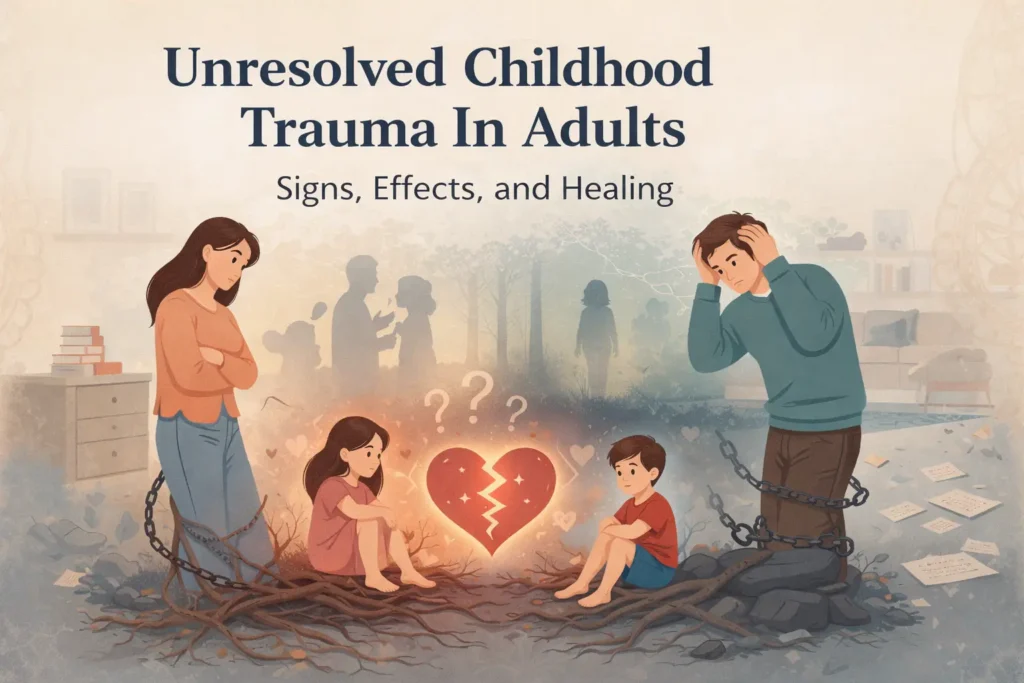
The Hidden Effects of Childhood Trauma in Adulthood
There are moments in adulthood that feel strangely disproportionate.
A simple criticism at work feels like rejection. A disagreement in a relationship triggers intense anxiety. A minor mistake leads to hours of self-blame. You may find yourself reacting strongly to situations that others seem to handle with ease.
Many adults assume these reactions mean they are “too sensitive” or “overthinking.” But often, these emotional responses are not about the present moment at all. They are echoes from the past – signals of unresolved childhood trauma still stored in the mind and body.
Childhood is the stage when our nervous system learns what safety, love, and belonging look like. When those early experiences involve neglect, fear, instability, or emotional confusion, the body records them deeply. Even when life appears stable later, those early imprints continue shaping how we think, feel, and relate to others.
What Is Unresolved Childhood Trauma?
Unresolved childhood trauma refers to painful experiences during early years that were never processed or integrated emotionally. Unlike physical injuries, emotional wounds do not always heal with time alone. If they are ignored or suppressed, they continue to influence behavior, relationships, and mental health in adulthood.
Trauma does not always come from extreme events. Sometimes it arises from subtle patterns – growing up in a household where emotions were dismissed, love was conditional, or conflict was constant. A child may not have the language to describe what is happening, but the nervous system remembers.
When those experiences remain unresolved, the adult version of that child may carry anxiety, insecurity, anger, or hypervigilance without fully understanding why.
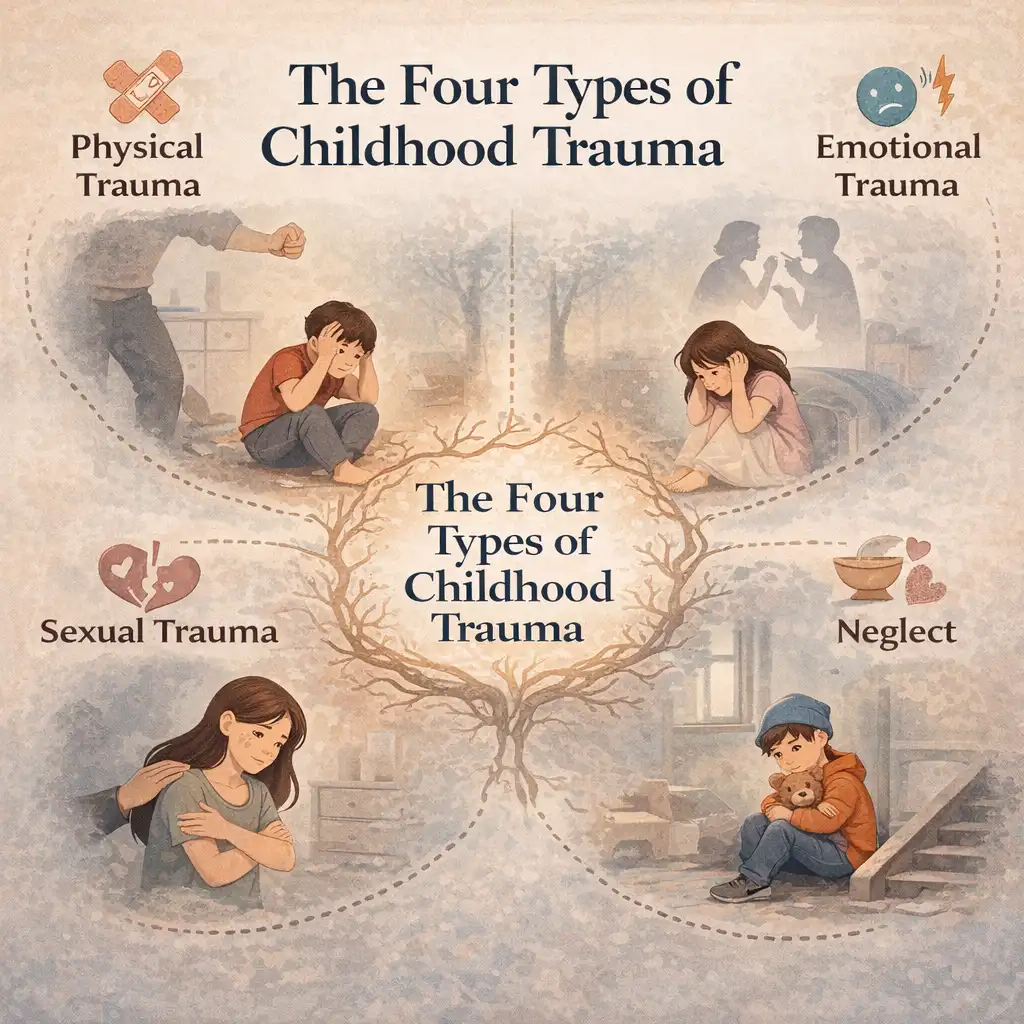
The Four Types of Childhood Trauma
Psychologists and trauma researchers often categorize childhood trauma into four broad types.
Physical trauma : occurs when a child experiences physical harm or violence. Even when the physical injuries heal, the emotional impact of fear and helplessness can linger.
Emotional trauma : happens when a child is consistently criticised, ignored, humiliated, or made to feel inadequate. Emotional wounds often go unnoticed because there are no visible scars.
Sexual trauma : involves any form of inappropriate sexual exposure or abuse. These experiences often lead to deep feelings of shame, confusion, and trust issues later in life.
Neglect : occurs when a child’s basic emotional or physical needs are not met. This may involve absent caregivers, lack of affection, or growing up in environments where the child feels invisible.
Each of these experiences shapes the developing brain and emotional system in profound ways.
The Psychological Effects of Childhood Trauma
Children who experience trauma adapt in order to survive. These adaptations help them cope in the moment but may create difficulties later in life.
Many adults with unresolved trauma develop patterns such as people-pleasing, perfectionism, emotional withdrawal, or excessive self-reliance. These behaviors once served as protection but can become barriers to healthy relationships and emotional stability.
Trauma also affects the nervous system. Adults who experienced childhood trauma may struggle with chronic anxiety, mood swings, difficulty trusting others, or feeling constantly on guard. Even in safe environments, the body may behave as though danger is present.
This is why trauma is often described as something stored not just in memory but in the body itself.
Signs of Emotional Trauma in Adults
Recognising emotional trauma can be challenging because its symptoms are often mistaken for personality traits.
Adults carrying unresolved trauma may find themselves constantly seeking approval or fearing rejection. They may struggle with low self-worth despite external achievements. Relationships can feel intense or unstable because emotional triggers surface easily.
Some people experience emotional numbness, finding it difficult to feel joy or connection. Others feel overwhelmed by emotions and struggle to regulate them.
These patterns are not signs of weakness. They are signs that the nervous system learned survival strategies early in life.
Signs of Unresolved Childhood Trauma in Adults
Certain patterns appear repeatedly in adults who have not processed early emotional wounds.
They may experience difficulty trusting people or forming secure attachments. Small conflicts may feel threatening, leading to either withdrawal or aggressive reactions. Many individuals also experience chronic guilt or feel responsible for other people’s emotions.
Overachievement is another common sign. Some adults attempt to compensate for childhood feelings of inadequacy by constantly proving their worth through work or success.
Sleep disturbances, digestive problems, and unexplained fatigue can also appear because the body remains in a state of stress long after the original trauma has passed.
A Simple Unresolved Childhood Trauma Test
While only trained professionals can provide formal assessments, reflecting on a few questions can offer insight into whether childhood trauma may still be influencing your life.
Ask yourself honestly:
Do you often feel responsible for other people’s happiness?
Do you fear abandonment even in stable relationships?
Do small criticisms affect you deeply?
Do you struggle to relax or feel safe even when nothing is wrong?
Do you often feel like you have to “earn” love or acceptance?
If several of these questions resonate, it may indicate emotional patterns rooted in early life experiences.
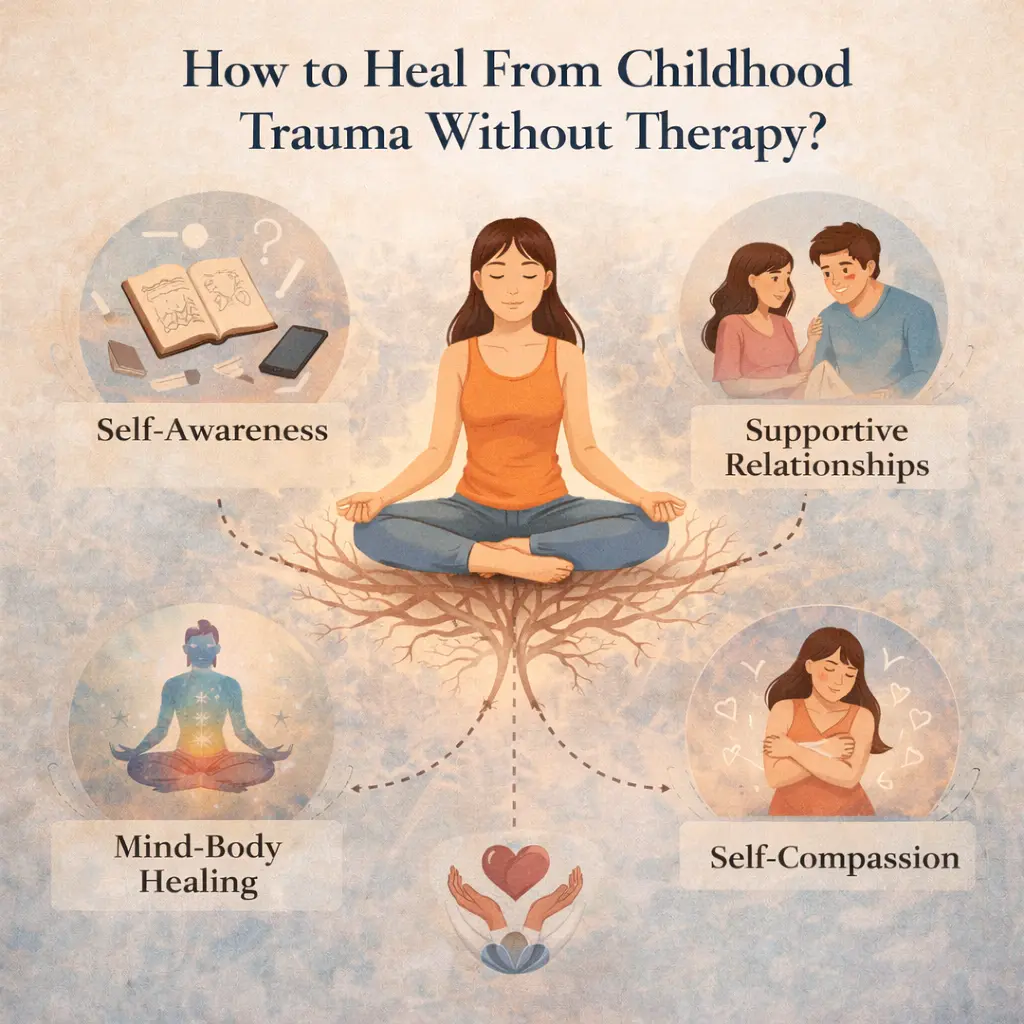
How to Heal From Childhood Trauma Without Therapy?
While professional therapy can be extremely helpful, healing is not limited to clinical settings. There are several ways individuals can begin reconnecting with themselves and addressing unresolved trauma.
Self-awareness is the first step. Journaling about emotional triggers, patterns in relationships, and childhood memories can help uncover underlying themes.
Mind-body practices such as breathwork, meditation, and somatic awareness help regulate the nervous system and release stored tension.
Creating supportive relationships is also powerful. Safe friendships or communities provide emotional experiences that may have been missing earlier in life.
Learning to practice self-compassion is equally important. Many adults with childhood trauma carry harsh inner critics. Replacing self-judgment with understanding gradually rewires emotional responses.
Finally, exploring structured healing programs designed to address childhood patterns can provide guidance and tools for deeper transformation.
Healing the Inner Child
At the heart of unresolved childhood trauma is often a wounded inner child—the younger part of ourselves that never received the safety, understanding, or reassurance it needed.
Healing does not mean erasing the past. It means acknowledging those experiences and allowing the nervous system to release what it has been holding for years.
When that process begins, something remarkable happens. Emotional triggers lose their intensity. Relationships feel safer. Decisions become clearer. Life stops feeling like a constant struggle for approval or survival.
The adult finally becomes the protector the child once needed.
Begin Your Healing Journey
If you recognise these patterns in your life, know that healing is possible.
Our Inner Child Course is designed to help individuals understand and release the emotional patterns formed in childhood. Through guided practices and insights, the program helps you reconnect with yourself, build emotional resilience, and create healthier relationships.
You can explore the course and begin your healing journey here:
Sometimes the most powerful step forward is simply turning toward the part of yourself that has been waiting to be seen.
FAQs
Unresolved childhood trauma refers to painful emotional experiences from early life that were never fully processed. These experiences can remain stored in the mind and body, influencing thoughts, emotions, relationships, and behavior in adulthood.
Common signs include chronic anxiety, fear of abandonment, people-pleasing, difficulty trusting others, emotional numbness, perfectionism, and strong reactions to criticism or conflict.
Childhood trauma can influence emotional regulation, relationships, self-worth, and mental health. Adults may struggle with anxiety, self-doubt, attachment issues, or patterns of overachievement and emotional withdrawal.
Yes. Unresolved trauma can make it difficult to trust others, create fear of rejection, or lead to unhealthy relationship patterns such as emotional dependency, avoidance, or conflict sensitivity.
Psychologists commonly categorize childhood trauma into four types: physical trauma, emotional trauma, sexual trauma, and neglect. Each type can impact emotional development and the nervous system differently.
Strong reactions often occur because current situations activate unresolved memories stored in the nervous system. The brain may interpret minor stress as a threat based on past experiences.
Yes. Many adults who experienced trauma in childhood develop chronic anxiety or hypervigilance because their nervous system learned to stay alert for potential danger.
Yes. Healing is possible through self-awareness, emotional processing, supportive relationships, and practices that regulate the nervous system such as meditation, journaling, or therapeutic approaches.
Inner child healing focuses on reconnecting with the younger parts of ourselves that experienced emotional pain. It helps individuals release old patterns, develop self-compassion, and build healthier emotional responses.
Healing often begins with recognising emotional patterns, exploring childhood experiences, practicing self-compassion, and engaging in structured healing methods such as inner child work, mindfulness, or therapy.