
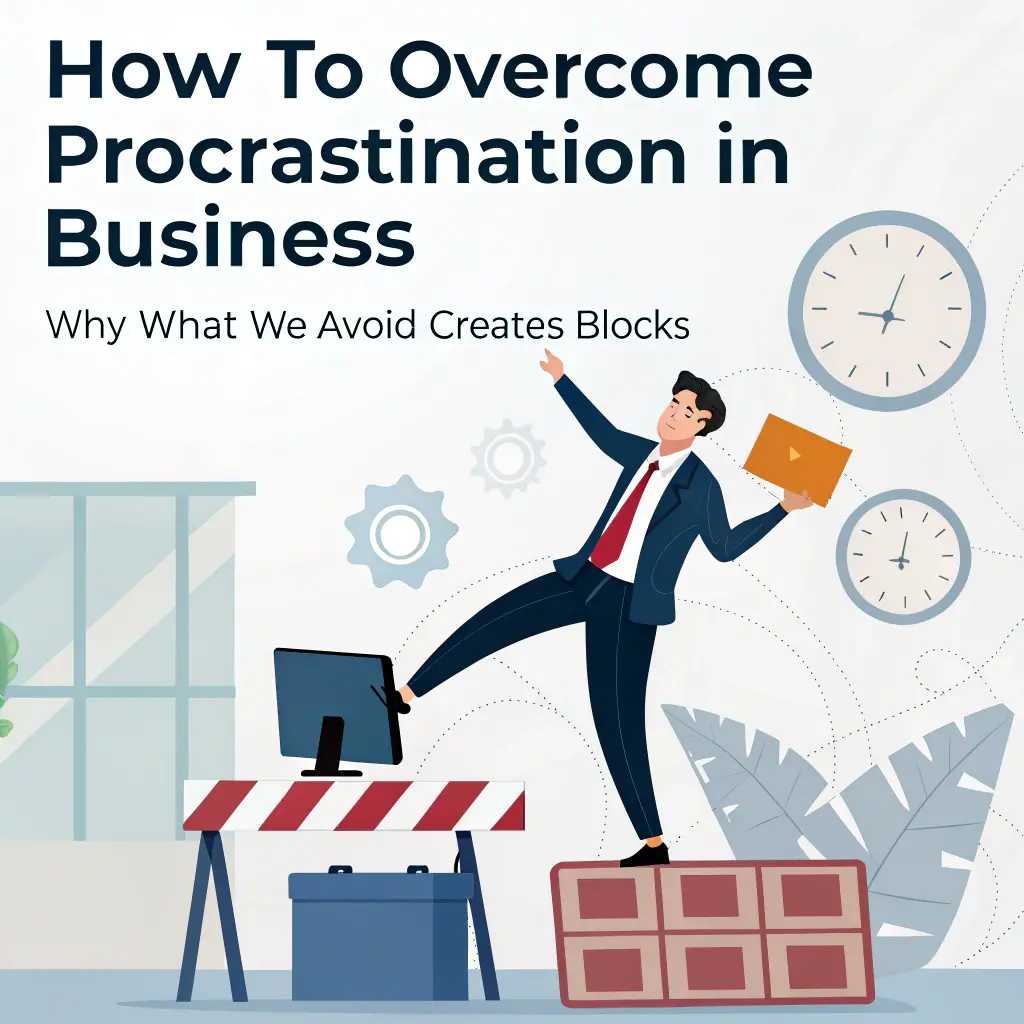
Avoidance is not just a behavioral pattern; it is an energetic and systemic block. According to systemic leadership principles discussed in the attached material, what is excluded or avoided in a system does not disappear – it resurfaces in other forms. In a business context, this could manifest as low conversions, team conflicts, financial instability, or stagnation despite consistent effort.
Understanding Avoidance in Business Context
Avoidance in business can take many forms—procrastination on strategic decisions, ignoring team issues, resisting financial clarity, or even avoiding visibility and marketing. Many entrepreneurs, especially in the wellness and service industry, avoid sales conversations due to fear of rejection or judgment. This avoidance creates a gap between potential and performance.
Research in behavioral psychology suggests that avoidance behaviors are linked to anxiety and perceived threat. A study published in the Journal of Behavioral Therapy highlights that avoidance temporarily reduces discomfort but reinforces long-term stress patterns. This means that while avoiding a task may give short-term relief, it strengthens the underlying fear, making the block even stronger over time.
Systemic Leadership Insight: What You Exclude, Controls You
One of the key insights from systemic leadership frameworks is that what is excluded from a system continues to influence it. In the attached PDF, the concept of “invisible dynamics” explains how unresolved elements in a system create patterns that repeat until acknowledged.
For example, if a business owner avoids looking at financial data due to fear or overwhelm, the business may continue to face cash flow issues. The avoidance of financial clarity becomes the very reason for financial instability. Similarly, avoiding conflict within a team can lead to passive-aggressive behavior, lack of accountability, and eventually, team breakdown.
Indian Case Study: Startup Founder Avoiding Sales Conversations
Consider the case of a Delhi-based wellness startup founder who had an excellent product but struggled with revenue. Despite investing in marketing and branding, conversions remained low. Upon deeper analysis, it was discovered that the founder was avoiding direct sales conversations due to discomfort around pricing and rejection.
Once the founder addressed this avoidance through coaching and emotional work, and began engaging directly with clients, revenue increased by 40% within three months. The problem was not the product or market—it was the avoidance of a critical business function.
Emotional Roots of Avoidance: The Inner Child Connection
Avoidance is often rooted in early emotional experiences. Many business owners carry subconscious beliefs formed during childhood—fear of failure, fear of judgment, or fear of being seen. These patterns influence decision-making and behavior in business.
Inner Child Healing becomes a powerful tool in this context. By addressing unresolved emotional wounds, individuals can release the fears that drive avoidance. When the inner child feels safe, the adult self can take aligned action without resistance.
For example, a Mumbai-based entrepreneur struggled with visibility on social media. Despite having valuable content, she avoided posting consistently. Through inner child work, she realized that her fear stemmed from childhood experiences of being criticized. Once this was addressed, her engagement and business growth improved significantly.
Access Bars: Releasing Mental Blocks and Overthinking
Another effective modality for addressing avoidance is the Access Bars process. Many forms of avoidance are linked to overthinking and mental clutter. When the mind is overwhelmed with thoughts, decisions feel heavier, leading to procrastination and inaction.
Access Bars works by releasing stored mental and emotional energy, creating clarity and ease. Clients often report reduced anxiety, improved decision-making, and increased action-taking after sessions. In a business context, this translates into better execution and fewer blocks.
How to Overcome Procrastination in Business and Break Avoidance Patterns
Avoidance creates blocks in business through multiple pathways. It delays decision-making, reduces visibility, weakens team dynamics, and creates financial instability. It also drains energy, as unaddressed issues consume mental space and emotional bandwidth.
From a neuroscience perspective, avoidance activates the brain’s threat response, keeping individuals in a state of stress. This limits creativity, problem-solving ability, and strategic thinking—all essential for business growth.
Breaking the Cycle of Avoidance: How to Overcome Procrastination in Business
The first step to breaking avoidance is awareness. Identifying what you are avoiding and why is crucial. This can be done through journaling, reflection, or working with a coach or therapist. Once identified, addressing the emotional root of avoidance becomes important.
Integrating practices like Inner Child Healing and Access Bars can support this process. These modalities help release the underlying fear and create a sense of safety, enabling action. Additionally, creating structured systems and accountability mechanisms can ensure consistent action.
Conclusion
The first step to breaking avoidance is awareness. Identifying what you are avoiding and why is crucial. This can be done through journaling, reflection, or working with a coach or therapist. Once identified, addressing the emotional root of avoidance becomes important.
Integrating practices like Inner Child Healing and Access Bars can support this process. These modalities help release the underlying fear and create a sense of safety, enabling action. Additionally, creating structured systems and accountability mechanisms can ensure consistent action.
Where to start
If any of this describes something you recognise, the first step is a conversation rather than a commitment. A free consultation exists to work out what would genuinely help — including saying plainly if this is not the right approach for you.