4 Phases of Menstrual Cycle: How Each Phase Affects Your Productivity & Helps You Plan Your Work
Introduction: Women Were Never Designed to Work the Same Way Every Day
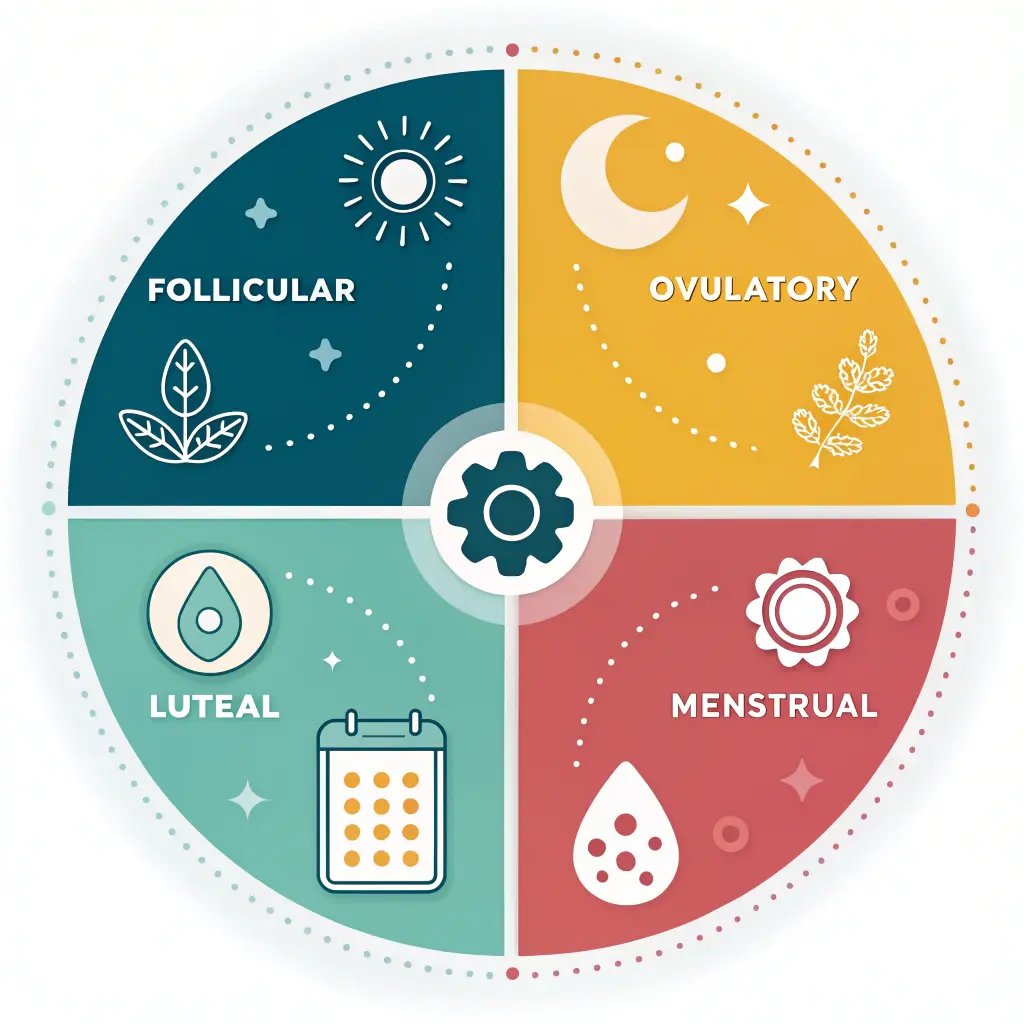
The 4 phases of the menstrual cycle are the menstrual phase, follicular phase, ovulation phase, and luteal phase. Each phase influences a woman’s energy levels, mood, focus, and productivity in different ways. By understanding these natural hormonal shifts, women can plan their work more effectively – using the menstrual phase for rest and reflection, the follicular phase for creativity and new ideas, the ovulation phase for communication and visibility, and the luteal phase for deep work and task completion. This approach, known as cycle-based productivity, helps women work with their body instead of against it, leading to better results with less burnout.
For decades, productivity systems have been built around consistency – waking up at the same time, working with the same energy, and performing at the same level every day. This model works reasonably well for men because male hormones follow a 24-hour cycle. Energy rises in the morning, drops at night, and resets the next day, making daily consistency easier to maintain.
Women, however, operate on a roughly 28-day hormonal cycle, not a 24-hour one. This means energy, mood, confidence, focus, and decision-making naturally shift across different phases of the month. During the menstrual phase, many women also experience physical symptoms like menstrual cramps, fatigue, or low energy, which further impacts their ability to maintain a fixed routine. When women try to follow rigid productivity systems that ignore these changes, they often feel inconsistent or unproductive. In reality, the issue is not discipline – it’s misalignment. Once women understand how to plan their work according to their menstrual cycle, productivity becomes more natural, sustainable, and aligned with their body.
Understanding the 4 Phases of the Menstrual Cycle
1. Menstrual Phase - Reflection and Strategy Phase
This phase begins when the period starts and usually lasts 3–5 days. Hormones are at their lowest, energy is lower, and the body naturally wants rest and reflection. However, this is also the phase where intuition and big-picture thinking are strongest.
This is the best time for reviewing goals, planning the month, journaling, reflecting on relationships or career decisions, and thinking about long-term strategy. It is not the best time for heavy social interaction, presentations, or overloading the schedule.
2. Follicular Phase - Creation and Planning Phase
This phase starts after the period ends. Estrogen begins to rise, energy improves, creativity increases, and the brain becomes more open to new ideas and learning.
This is the best time to start new projects, brainstorm ideas, plan workshops, learn new skills, network, and try new habits.
3. Ovulation Phase - Communication and Visibility Phase
This is when estrogen peaks and women often feel most confident, social, expressive, and visible. Communication skills are strongest during this phase.
This is the best time for meetings, presentations, networking events, interviews, sales conversations, workshops, public speaking, and important conversations.
4. Luteal Phase - Execution and Completion Phase
This phase begins after ovulation and lasts until the next period. Progesterone rises, and energy slowly begins to reduce. However, focus and analytical ability increase during this phase.
This is the best time for deep work, editing, accounting, organising, cleaning up systems, finishing pending tasks, and administrative work.
Cycle-Based Productivity Planning for the Month
Week 1
Strategy and Reflection
Week 2
Creation and Planning
Week 3
Communication & Visibility
Week 4
Execution and Completion
Conclusion: Work With Your Body, Not Against It
Cycle-based productivity is not about doing less work. It is about doing the right work at the right time. When women align their work with their hormonal cycle, they experience less burnout, better decision making, higher productivity, better emotional stability, and stronger leadership presence.
Women do not need to become more like men to succeed. Women need to understand how they are designed to function.
Time management works for men. Energy and cycle management works for women.
FAQs
The 4 phases of the menstrual cycle are the menstrual phase, follicular phase, ovulation phase, and luteal phase. Each phase brings different hormonal changes that affect a woman’s energy, mood, and productivity levels.
The menstrual cycle affects productivity by influencing energy levels, focus, creativity, and emotional state. Some phases support deep work and planning, while others are better suited for communication, creativity, or rest.
Cycle-based productivity is a method of planning work according to the different phases of the menstrual cycle. It helps women align their tasks with their natural energy patterns to improve efficiency and reduce burnout.
Women can plan work by aligning tasks with each phase — using the menstrual phase for reflection, the follicular phase for new ideas, the ovulation phase for communication, and the luteal phase for execution and completion.
Each phase supports a different type of productivity. Ovulation is best for communication and visibility, the follicular phase for creativity, the luteal phase for focused work, and the menstrual phase for planning and reflection.
Yes, cycle syncing can improve work performance by helping women work with their natural energy instead of against it. This leads to better focus, improved decision-making, and less mental and emotional fatigue.
Women may feel low energy during phases like menstruation and late luteal phase due to hormonal changes, especially lower estrogen levels. This is a natural biological response and signals the need for rest and slower pacing.
Cycle-based productivity is based on hormonal patterns and how they affect brain function, mood, and energy. While individual experiences may vary, research shows that hormonal fluctuations do influence cognitive performance and behavior.