
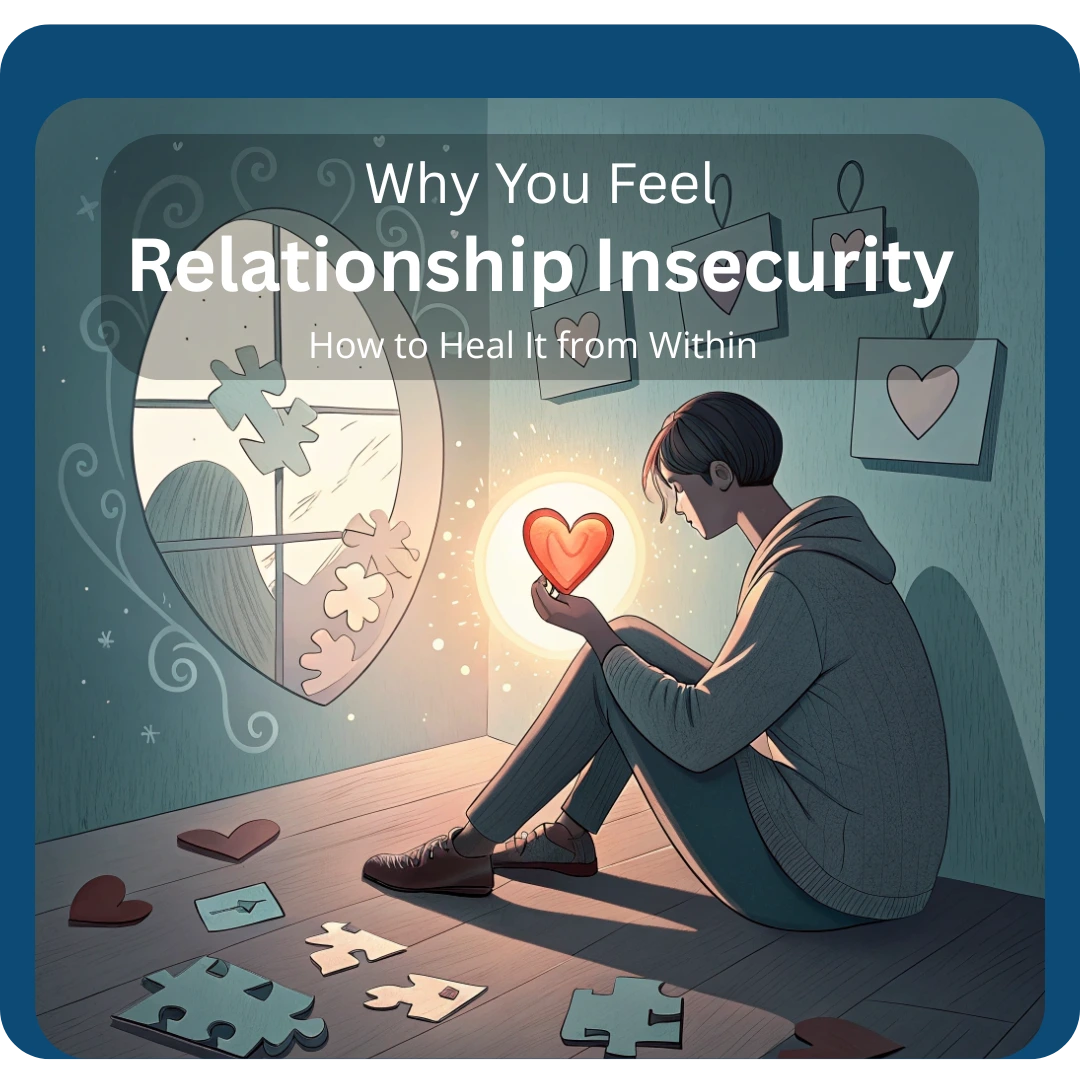
Why You Feel Relationship Insecurity and How to Heal It from Within
Table of Contents
Introduction to Relationship Insecurity
You check your phone a little too often. You overthink every text, every delay, every shift in tone. When he’s with you, you feel calm. But the moment he pulls away—even slightly—you spiral into fear. Feeling insecure in a relationship is more common than we admit. But it’s not about your partner—it’s about you, your past, and hidden emotional patterns.
Where Does Relationship Insecurity Come From?
Relationship insecurity is a protective pattern built over time. Common sources include:
- Childhood attachment wounds
- Unhealed past relationships
- Low self-worth
- Fear of abandonment rooted in the inner child
Signs of Relationship Insecurity in a Relationship
It often shows up as:
- Constant need for reassurance
- Jealousy or comparison
- Overanalyzing your partner’s actions
- Trying to control situations
- Sabotaging the relationship due to fear
How to Begin Healing Relationship Insecurity
The goal is to regulate your inner world so you’re not destabilized by external triggers. Here’s how:
Reparent Your Inner Child
Visualize the little girl in you who was afraid and unloved. Tell her, ‘I see you. I love you. You’re safe with me now.’ Inner child work rewires the roots of insecurity.
Notice the Story, Not the Trigger
Pause when you’re triggered. Ask:
- What story am I telling myself?
- Is it true?
- Have I felt this fear before?
This helps separate fear from fact.
Regulate Your Nervous System
Use tools like:
- Deep belly breathing
- EFT tapping
- Grounding techniques
- Journaling
Create Emotional Safety Routines
Build daily rituals that affirm inner safety:
- Morning intentions
- Affirmations
- Relationship check-ins
- Social media boundaries
Family Constellation Therapy (Deeper Systemic Healing)
Sometimes insecurity is ancestral. Family Constellation Therapy can reveal entanglements:
- Bonds with unhealed maternal wounds
- Hidden loyalty to betrayed ancestors
- Inherited beliefs like ‘men don’t stay’
What a Healthy Relationship Needs Instead
When secure within yourself, you can:
- Communicate calmly
- Allow space
- Trust without needing proof
- Feel emotions without reacting impulsively
A Note to the Woman Reading This
Insecurity, neediness, and fear are not flaws. They are wounds asking to be witnessed. You deserve love that feels safe—not just in his arms, but within yourself.
Ready to Heal Your Relationship Anxiety?
At The Healing Room, we support women in healing relationship anxiety and building emotional resilience:
💠 Inner Child Therapy
💠 Family Constellation Therapy
💠 Emotional Safety Workshops
💠 Nervous System Healing
📍 Bijwasan Farms, Delhi NCR
🔗 www.sonalimittra.com
📞 Book your session today.
Relationship insecurity often arises from childhood attachment wounds, unhealed past relationships, low self-worth, and fear of abandonment rooted in the inner child.
Signs include constant need for reassurance, jealousy or comparison, overanalyzing your partner’s actions, trying to control situations, and sabotaging the relationship due to fear.
You can start by reparenting your inner child, noticing the story instead of the trigger, regulating your nervous system with techniques like deep breathing and journaling, and creating emotional safety routines.
Inner child work involves visualizing and comforting the younger version of yourself who felt afraid or unloved, affirming safety and love to rewire the roots of insecurity.
Yes, sometimes insecurity is ancestral. Family Constellation Therapy can reveal unhealed maternal wounds, hidden loyalty to betrayed ancestors, or inherited beliefs like 'men don’t stay.'
A healthy relationship requires being secure within yourself, which allows you to communicate calmly, allow space, trust without needing proof, and feel emotions without reacting impulsively.
The Healing Room supports women through Inner Child Therapy, Family Constellation Therapy, Emotional Safety Workshops, and Nervous System Healing to build emotional resilience and heal relationship anxiety.

I sometimes panic when my partner wants to hang out with friends without me, thinking it’s rejection. This article helped me see that it’s really about trusting myself and letting go of old fears — not him.
I relate so much to the “fear of being too much” feeling. I used to hide my opinions and emotions because I didn’t want to upset anyone. Learning that my insecurity is separate from my relationship is freeing.
The part about reparenting your inner self really resonated. I realized I’ve been expecting my partner to give me the love and security I didn’t get as a kid. That’s such a huge insight — makes me want to be kinder to myself first.
I’ve always over-apologized for tiny things in my relationship, even when I did nothing wrong. Reading that it’s linked to internal insecurity rather than their actions really hit me. I’m going to work on saying what I feel without guilt.
I’ve been insecure about my partner talking to friends of the opposite gender. I felt jealous but ashamed of feeling that way. This article helped me understand that acknowledging these feelings without judgment is the first step to healing.
I laughed a little reading the part about “looking for signs everywhere.” Guilty! I check texts and social media over and over. Realizing this comes from within me and not him is eye-opening.
I noticed that I often assume my partner will get annoyed or leave if I share my needs. I never connected this to my childhood fear of disappointing my parents. This perspective is such a relief!
There are nights I lie awake overthinking every little argument, feeling like I’m not enough. This post helped me see that my insecurity isn’t a flaw — it’s just old fear resurfacing. Definitely going to try the journaling tip tonight.
I used to get so anxious if my boyfriend didn’t text me back immediately. I thought it meant he didn’t care, but reading this made me realize it’s really about my own fear of being abandoned. I’m trying to pause and breathe before reacting now.
What a valuable piece. So often we treat relationship insecurity as a “partner problem,” but this post shows it’s often about what’s within us. Healing relationship insecurity from within is a powerful mindset — I’m inspired to begin that journey.
I appreciated how balanced and thoughtful this article was. It didn’t promise quick fixes but instead encouraged gentle self-exploration. The insights shared here feel grounded in real emotional understanding, not just theory