How to Stop Overthinking: When the Mind Refuses to Rest
How to Stop Overthinking
Overthinking can be reduced by calming the nervous system rather than forcing the mind to be silent. When the body feels safe, mental loops naturally soften. Effective strategies include stress regulation, emotional processing, somatic awareness, and reducing cognitive overload. Sustainable relief comes from addressing the root cause, not suppressing thoughts.
It rarely begins dramatically. It starts with a conversation replayed on your way home, an email you wish you had rewritten, or a decision that suddenly feels questionable late at night. Overthinking quietly occupies mental space until your mind becomes a place that feels impossible to switch off.
For many individuals, this constant mental looping gradually leads to emotional fatigue. What feels like “being careful” slowly transforms into exhaustion, restlessness, and sleep disruption. Over time, these patterns can resemble early burnout symptoms, especially when the nervous system remains under sustained pressure.
Why Learning How to Stop Overthinking Feels So Difficult
If overthinking could be solved by simply “thinking less,” most people would already be free from it. The challenge exists because overthinking is often tied to perceived safety. The mind believes analysing every possibility prevents mistakes, rejection, or uncertainty.
In high-pressure professional environments, this pattern intensifies. Performance expectations, leadership roles, and constant evaluation create internal vigilance. This is why many professionals benefit from structured interventions such as corporate wellness programs, which address stress regulation, mental resilience, and emotional balance.
How to Stop Overthinking When Your Mind Is Always “On”
Many people search for ways to stop overthinking because mental exhaustion eventually becomes unavoidable.
You think before you speak, while you speak, and long after the conversation has ended. You replay scenarios that may never happen and revisit moments that cannot be changed. Even rest becomes mentally crowded.
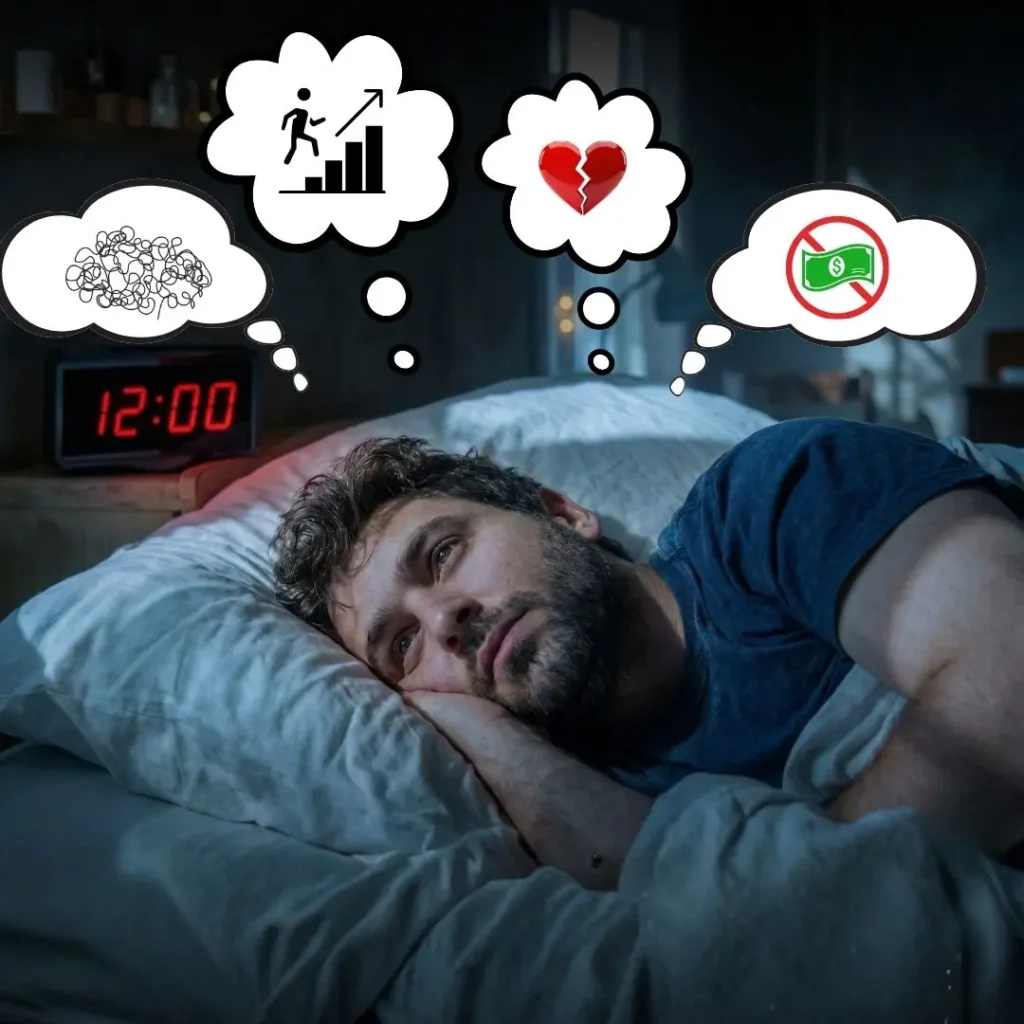
Sleep is often the first casualty. The body is tired, yet the mind continues generating thoughts, rehearsing possibilities, revisiting worries. The harder you try to switch it off, the louder it can seem.
This is not simply mental chatter. It is cognitive hyper-vigilance.
How to Stop Overthinking by Understanding the Body
Overthinking is not confined to the mind. It is deeply connected to the body’s stress response. Chronic thinking loops keep the nervous system in a subtle fight-or-flight mode, even when no immediate threat exists.
This explains why overthinkers frequently experience tightness, shallow breathing, fatigue, and restless sleep. Modalities focused on nervous system regulation and body-based healing help release stored tension that perpetuates cognitive hyperactivity.
How to Stop Overthinking Without Fighting Your Thoughts
Attempting to suppress thoughts often increases internal resistance. The mind interprets forceful control as another problem to solve. Instead of calm, people experience frustration and intensified mental noise.
Gentler therapeutic frameworks, including Family Constellation Therapy, allow individuals to explore subconscious stress patterns and systemic emotional influences that sustain overthinking cycles.
The Emotional Roots Behind Overthinking
Overthinking is frequently linked to early adaptation. Many individuals learned to stay mentally alert in unpredictable environments. The mind became a tool for anticipating problems and maintaining emotional safety.
As adults, this adaptation may persist long after the original conditions have changed. Sessions focused on emotional healing and subconscious pattern awareness help dissolve the deeper anxiety driving mental loops.
How to Stop Overthinking in Relationships
Overthinking rarely stays contained within the individual.
It spills into communication, connection, and emotional intimacy. Pauses may be interpreted as rejection. Neutral comments may be analysed for hidden meaning. Reassurance may feel temporarily soothing but quickly questioned by the mind’s alternative narratives.
This can lead to emotional fatigue, withdrawal, or tension in otherwise healthy relationships. Not because the bond is weak, but because the internal dialogue never fully quietens.
The mind keeps searching for certainty where trust is required.
How to Stop Overthinking by Creating Inner Safety
The mind quiets naturally when the nervous system experiences safety. Sustainable change does not come from stricter mental discipline but from physiological regulation and emotional processing.
Integrated therapeutic work combining mind-body healing, energy-based practices, and psychological awareness helps restore balance between thought, emotion, and physical state.
A Gentle Invitation
If overthinking has been draining your mental energy, affecting your sleep, or creating emotional heaviness, it may be time to explore deeper regulation rather than more mental control.
At The Healing Room, we work with the underlying patterns behind chronic thinking loops through therapies that support emotional balance, nervous system stability, and sustainable wellbeing.
FAQs
Overthinking is often triggered by stress, anxiety, fear of mistakes, perfectionism, unresolved emotional tension, or a nervous system stuck in hyper-vigilance.
Occasional overthinking is normal. Chronic overthinking, especially when it disrupts sleep, focus, or emotional wellbeing, may be linked to anxiety or stress-related conditions.
Common signs include mental loops, difficulty switching off thoughts, replaying conversations, decision paralysis, sleep disturbances, and constant self-analysis.
Yes. Overthinking can contribute to tension, headaches, fatigue, shallow breathing, digestive discomfort, and sleep disruption due to nervous system activation.
Effective strategies often involve nervous system regulation, mindfulness, somatic practices, emotional processing, and reducing cognitive overload rather than forcing mental silence.
At night, distractions decrease, making unresolved thoughts and emotional tension more noticeable. Stress hormones can also influence mental restlessness.
Yes. Therapies addressing emotional triggers, stress patterns, and nervous system regulation can significantly reduce chronic overthinking.
Frequently. Overthinking is a common feature of anxiety, as the mind attempts to predict outcomes and reduce perceived uncertainty.
It varies. Some individuals notice improvements quickly with regulation techniques, while deeper patterns may require consistent therapeutic work.
Yes, when balanced. Analytical thinking and reflection are valuable, but they must be regulated to avoid turning into rumination and exhaustion.