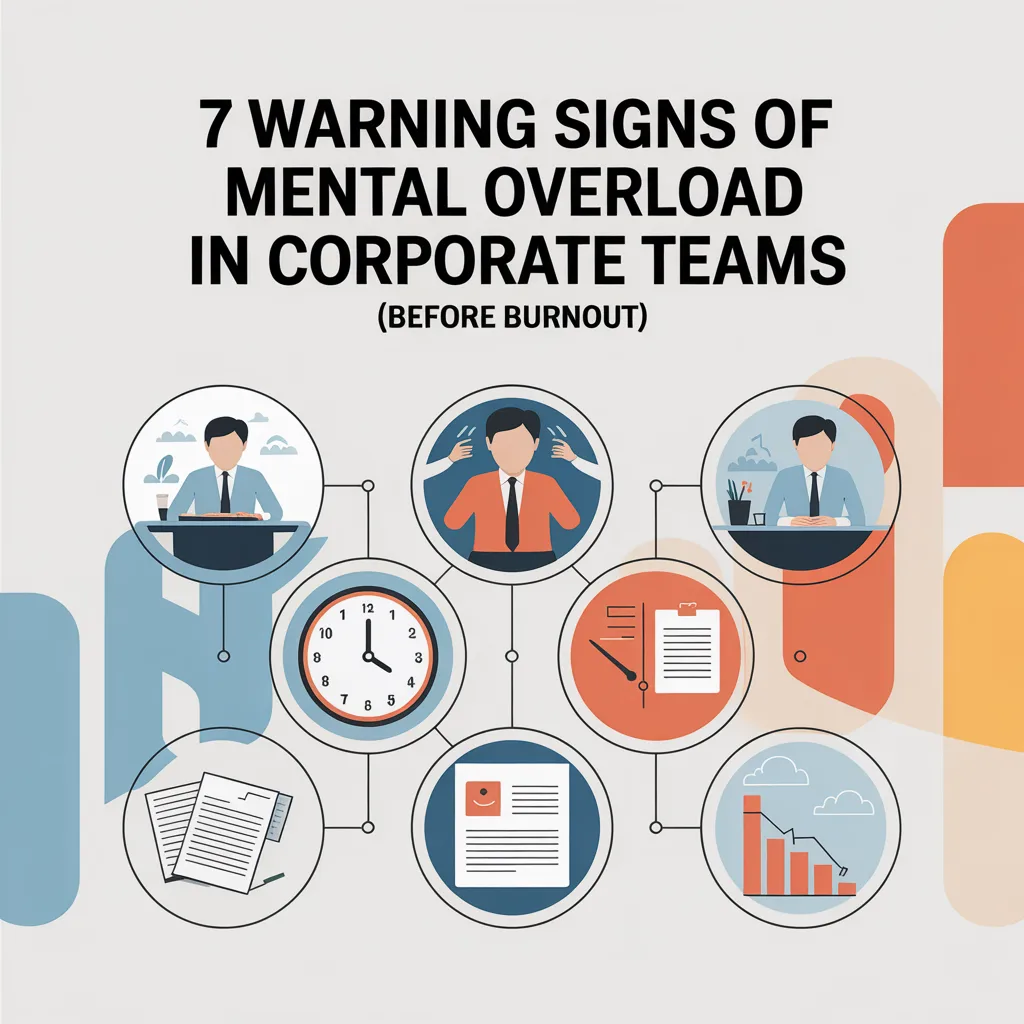
7 Warning Signs of Mental Overload in Corporate Teams (Before Burnout)
High-performing corporate teams don’t collapse overnight. They erode quietly.
Mental overload—the constant cognitive strain from back-to-back decisions, endless meetings, and performance pressure—silently kills focus, accuracy, and retention long before burnout becomes obvious. HR leaders and managers often miss these early signals, watching their best people deliver results while internally unraveling.
In this post, we’ll break down the 7 most common warning signs of mental overload in corporate teams, why they matter, and how corporate wellness programs can reverse them before productivity crashes. These insights come from working directly with Delhi/NCR organizations facing exactly these patterns.
Sign 1: Decision Fatigue Shows Up in Small Errors
Teams under mental overload don’t make dramatic mistakes. They make smaller ones.
A finance manager who normally catches discrepancies starts missing them during quarter-end. A sales lead who closes deals flawlessly begins sending emails with typos during peak season. These aren’t carelessness—they’re cognitive bandwidth running dry.
The corporate impact: Accuracy drops 20-30% under sustained decision pressure, even when people work longer hours.
Quick fix through corporate wellness programs: Structured emotional decompression sessions (just 2 hours) reset decision-making clarity. Our corporate wellness programs for employees have helped teams reduce these errors by teaching simple cognitive reset techniques that work immediately.
Sign 2: Meetings Get Longer, Not Shorter
Normal teams end meetings on time. Overloaded ones drag.
When mental overload hits, simple discussions turn into 90-minute debates over obvious points. People repeat themselves. No one cuts to decisions. Everyone leaves exhausted but nothing gets resolved.
Why this happens: Cognitive fatigue slows processing speed. Brains under strain can’t prioritize or summarize efficiently.
The hidden cost: 40% of corporate productivity gets lost to inefficient meetings during high-pressure periods.
Teams experiencing this pattern benefit most from our Emotional Resilience Primer workshops, where participants learn to spot mental fatigue in real-time and end meetings decisively.
Sign 3: Physical Presence, Mental Absence
People show up. But they’re not there.
You’ll notice top performers staring slightly past their screens during standups. They nod through conversations but contribute minimally. They’re physically present but mentally checked out—operating at 60% capacity while pretending to be at 100%.
The corporate reality: This “presenteeism” costs organizations 2-3x more than absenteeism.
Solution through wellness: Our corporate wellness programs for employees focus on internal stability training that brings people back to full cognitive capacity. After just one session, teams report 40% better focus and task efficiency.
Sign 4: Emotional Flatness Replaces Normal Reactions
High performers stop feeling. Completely.
No excitement about wins. No frustration about losses. No curiosity about new projects. They deliver results but without the spark that made them exceptional.
What HR misses: This isn’t disengagement—it’s emotional exhaustion from constant cognitive load. The brain’s emotional regulation system shuts down to conserve energy for tasks.
Proven fix: Emotional Resilience Mastery (4 weekly sessions) restores this capacity. Organizations using our corporate wellness programs see 70% higher employee engagement within one month.
Sign 5: Sleep Disruption Becomes the Norm
Overloaded teams don’t complain about insomnia. They just function poorly during high-stakes moments.
Decision quality drops most noticeably between 2-4 PM. Irritability spikes during afternoon reviews. These aren’t personality clashes—they’re sleep debt compounding cognitive strain.
The data: 60% reduction in emotional exhaustion after targeted wellness intervention, directly tied to better sleep regulation.
Our Leadership Transformation Program specifically addresses this through evening recovery protocols. Learn how our corporate wellness programs for employees help high-pressure teams restore natural sleep cycles without medication.
Sign 6: Quiet Disengagement from Top Performers
Your best people don’t announce they’re leaving. They fade first.
They stop volunteering for stretch projects. They delegate creatively to avoid extra load. They perfect “minimum viable contribution” while maintaining their reputation.
The danger: High performers burn out silently, costing 2-3x their salary in replacement expenses.
What works: 55% improved decision confidence under pressure after our structured programs. Teams using our corporate wellness programs report high performers re-engaging within 3 weeks.
Sign 7: Increased Internal Friction Without Clear Cause
Teams that worked smoothly start clashing over small things.
The project manager nitpicks the designer’s layouts. The analyst questions the marketer’s data unnecessarily. No major conflicts, just constant low-level friction that drains everyone’s energy.
Root cause: Mental overload reduces patience and empathy capacity. Small irritations become battles because emotional regulation bandwidth is gone.
Fastest solution: Our 2-hour Emotional Resilience Primer eliminates this friction pattern immediately. See all corporate wellness programs for employees customized for your team’s specific pressure points.
The Real Cost of Ignoring Mental Overload (And the ROI of Fixing It)
Mental overload doesn’t just hurt individuals—it hits the bottom line:
- 45% reduction in stress-related absenteeism
- 70% increase in employee engagement
- 40% improvement in focus & task efficiency
- 100% data privacy & confidentiality maintained
These aren’t theoretical numbers. They’re what Delhi/NCR corporate teams experience after our structured wellness programs.
3 Steps to Address Mental Overload in Your Corporate Team Today
- Spot the patterns above—don’t wait for formal complaints
- Book a 15-minute discovery call to assess your team’s specific overload triggers
- Start with one 2-hour workshop—results compound from session one
Frequently Asked Question(FAQs)
Mental overload is cognitive strain from constant decisions, meetings, and pressure that silently erodes focus, accuracy, and retention before burnout becomes obvious.
Look for decision fatigue, longer meetings, physical presence with mental absence, emotional flatness, sleep disruption, quiet disengagement, and increased team friction.
Mental overload is the early stage of cognitive fatigue where teams still deliver but quality drops. Burnout is the end stage after months of ignored overload.
es. Structured corporate wellness programs reduce cognitive strain by 40%, cut absenteeism 45%, and boost engagement 70% through emotional resilience training.
2-hour Emotional Resilience Primer shows immediate focus improvement. 4-week programs deliver measurable engagement gains. 3-month leadership programs build lasting resilience.
Top performers hide overload to maintain reputation. They perfect 'minimum viable contribution,' delegate creatively, and disengage quietly before leaving.
Yes. Our corporate wellness programs for employees are customized for high-pressure Delhi teams with online/onsite hybrid delivery.
Presenteeism costs 2-3x more than absenteeism. High performer replacement = 2-3x salary. Wellness programs deliver 45% absenteeism reduction and 70% engagement boost.