On Emotional Disconnection, Invisible Isolation, and the Fear of Being Truly Seen
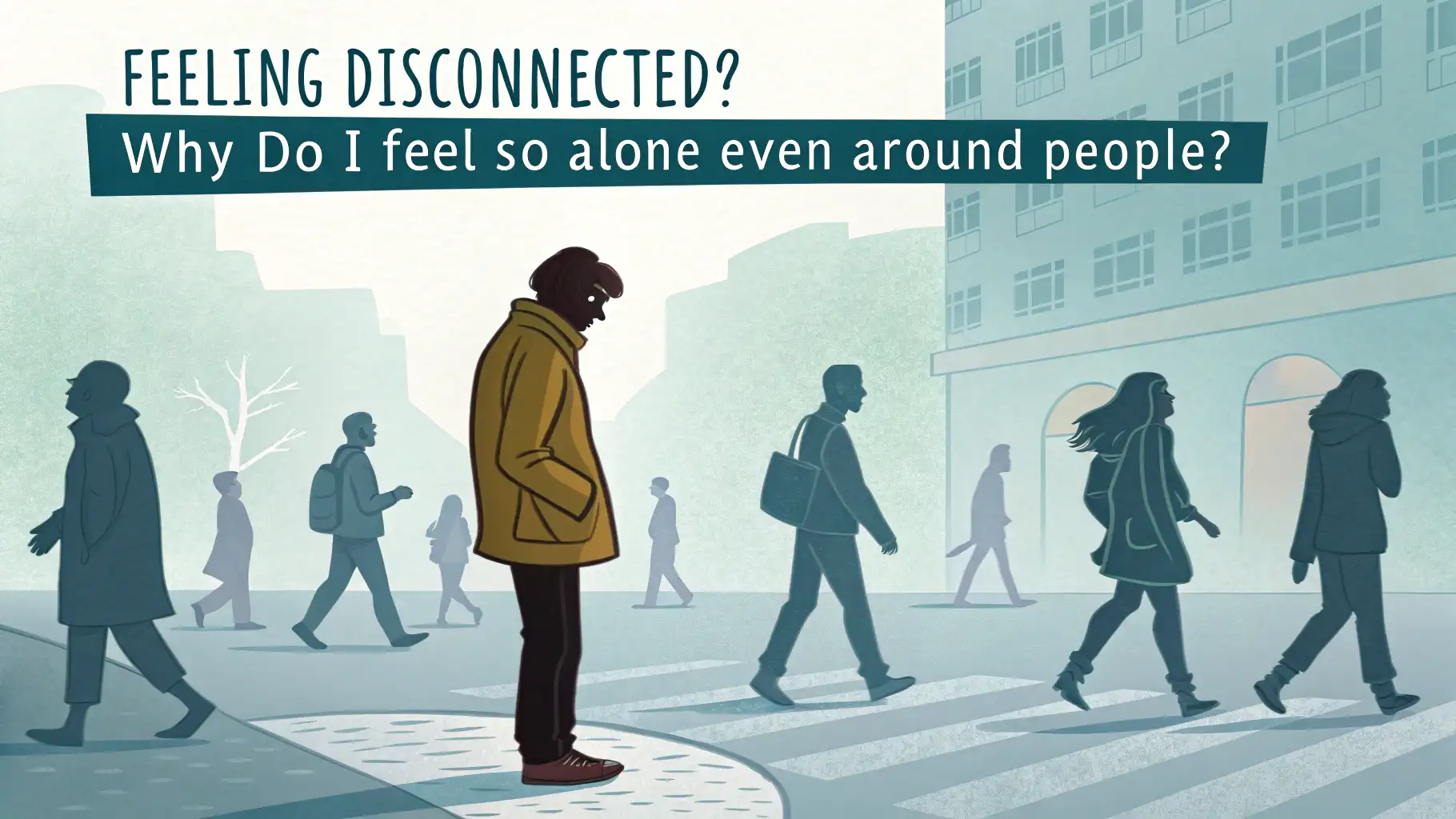
Feeling disconnected is often one of the most painful experiences a person can carry because it can exist even in the presence of others. There are people who are surrounded by conversations and yet feel untouched by them. They answer messages, attend dinners, sit in meetings, laugh at the appropriate moments, and continue participating in the rituals of social life with reasonable competence. Nothing appears visibly wrong. And yet, somewhere beneath this performance of connection, there exists a persistent and private loneliness that language struggles to describe.
It is not the loneliness of physical isolation
It is more complicated than that. It is the feeling of standing emotionally outside life while still participating in it.
Many people today describe this sensation as “feeling disconnected.” But disconnection is rarely sudden. It forms quietly, through years of emotional adaptation. A child learns very early which emotions are welcome and which emotions threaten belonging. If vulnerability was ignored, if sensitivity was mocked, if needs were too much for the family system, the child slowly learns to disconnect from parts of themselves in order to remain loved.
And eventually, what began as protection becomes personality.
The Loneliness Beneath Functionality
Modern life rewards functionality. As long as a person is productive, responsive, and socially appropriate, very few people ask whether they feel emotionally alive. A person can be deeply disconnected and still appear successful. In fact, emotional disconnection often produces high-functioning individuals because emotional suppression creates discipline, performance, and hyper-independence.
The problem is that what protects us socially often isolates us internally.
A woman says she cannot feel close to anyone, even in relationships. A man says he feels emotionally numb despite having friends and family around him. Another person constantly over-gives, hoping connection will emerge through usefulness. Yet underneath these different behaviours lies the same fear:
“If people truly see me, will I still belong?”
This fear is rarely conscious. It sits deeper than thought. It lives in the nervous system.
Inner Child Healing often reveals that many adults are still emotionally operating from younger versions of themselves who learnt that authenticity was unsafe. The child who was criticised learns emotional restraint. The child who was emotionally neglected learns not to need connection. The child who became responsible for everyone else learns to perform strength instead of receiving support.
Years later, these adaptations remain active, even when the original environment is gone.
Family Systems and Emotional Exile
Family Constellation work offers another layer of understanding. It suggests that disconnection is not always individual. Sometimes it is systemic.
Human beings are deeply loyal to their family systems, often unconsciously. A child may disconnect emotionally in order to stay aligned with the emotional rules of the family. In some systems, emotions were dangerous. In others, vulnerability was weakness. In many families, survival mattered more than emotional expression.
As a result, generations inherit silence.
A grandmother who never spoke of grief. A father who learnt to suppress emotion to survive responsibility. A mother who carried loneliness but never acknowledged it. The child absorbs these emotional realities long before language develops.
And eventually, disconnection becomes normal.
The person says:
“I don’t know why I cannot connect deeply with people.”
But perhaps connection once threatened safety.
Family Constellation therapy frequently reveals that people unconsciously carry emotional burdens that do not belong to them. Sometimes what feels like isolation is inherited emotional exile. A person may carry unresolved grief, guilt, or shame from previous generations without understanding why closeness feels difficult.
The psyche remains loyal to what is familiar, even if what is familiar is loneliness.
The Illusion of Connection in the Digital Age
Access Consciousness often speaks about awareness versus conclusion. Modern culture offers endless opportunities for stimulation but very few opportunities for genuine presence. People communicate constantly yet rarely reveal themselves. Social media creates visibility without intimacy.
A person can share photographs, opinions, achievements, and carefully curated vulnerability while remaining emotionally unreachable. The result is a strange paradox: people are more connected technologically than ever before, yet emotional isolation continues to rise globally.
Human beings do not heal through visibility alone. They heal through resonance, safety, and authentic emotional presence.
And authentic presence requires risk. It requires uncertainty. It requires the possibility of rejection. It requires allowing another human being to witness parts of ourselves we carefully control. Most people are not disconnected because they cannot find others. They are disconnected because they have learnt to survive by remaining emotionally guarded.
The Body Disconnects Before the Mind Notices
Emotional disconnection is not only psychological. It becomes physiological. The body often responds to prolonged emotional suppression by creating numbness. A person stops feeling deeply, not because nothing exists inside them, but because the nervous system no longer experiences emotional openness as safe.
This is why disconnected people often describe themselves as:
– tired but restless
– socially present but emotionally absent
– unable to feel joy fully
– uncomfortable with affection
– anxious after intimacy
– lonely even in relationships
The body cannot selectively numb pain. It eventually numbs pleasure too.
Access Consciousness approaches this differently by asking questions rather than reinforcing conclusions. Instead of asking:
“What is wrong with me?”
One begins asking:
“What is this? What can I do with this? Can I change it? How can I change it?
That question alone creates space.
Because awareness softens identity.
Why Genuine Connection Feels Threatening?
Many people say they want a deeper connection. But when closeness appears, discomfort emerges. The nervous system becomes alert. Overthinking begins. Withdrawal follows. This is because genuine connection requires surrendering control. And for many people, control became the strategy that kept them emotionally safe.
Inner Child Healing recognises that children who experienced emotional unpredictability often become adults who carefully manage relationships to avoid disappointment. They may appear independent, emotionally composed, or detached, but beneath this control is often grief.
Grief for the connection they never fully received. Healing does not begin by forcing social interaction. It begins by slowly rebuilding emotional safety within the self. A person cannot feel deeply connected to others while remaining disconnected from their own emotions, needs, and body.
A Small Exercise: Returning to Yourself
Find a quiet space. Sit comfortably. Close your eyes. Imagine the younger version of yourself sitting alone somewhere familiar. Do not change anything. Simply observe.
Notice:
– How old are they?
– What expression do they carry?
– Whether they appear guarded, anxious, lonely, or withdrawn
Now sit beside them internally and say:
“You do not have to disappear to belong anymore.
You do not have to perform strength to be loved.
I am here with you now.”
Do not force emotion. Simply notice what the body feels.
Connection begins not when others finally understand us, but when we stop abandoning ourselves internally.
The Return to Human Connection
Healing emotional disconnection is not about becoming endlessly social or emotionally exposed. It is about restoring the capacity to feel present, safe, and alive within connection. Sometimes the deepest loneliness is not the absence of people.
It is the absence of ourselves within our own lives.
And perhaps the real work is not learning how to connect with others first, but learning how to return to the parts of ourselves we left behind in order to survive.
If this blog resonated with you, perhaps your loneliness is not weakness. Perhaps it is an invitation.
An invitation to reconnect.
First with yourself.
Then with life.
Book a clarity call