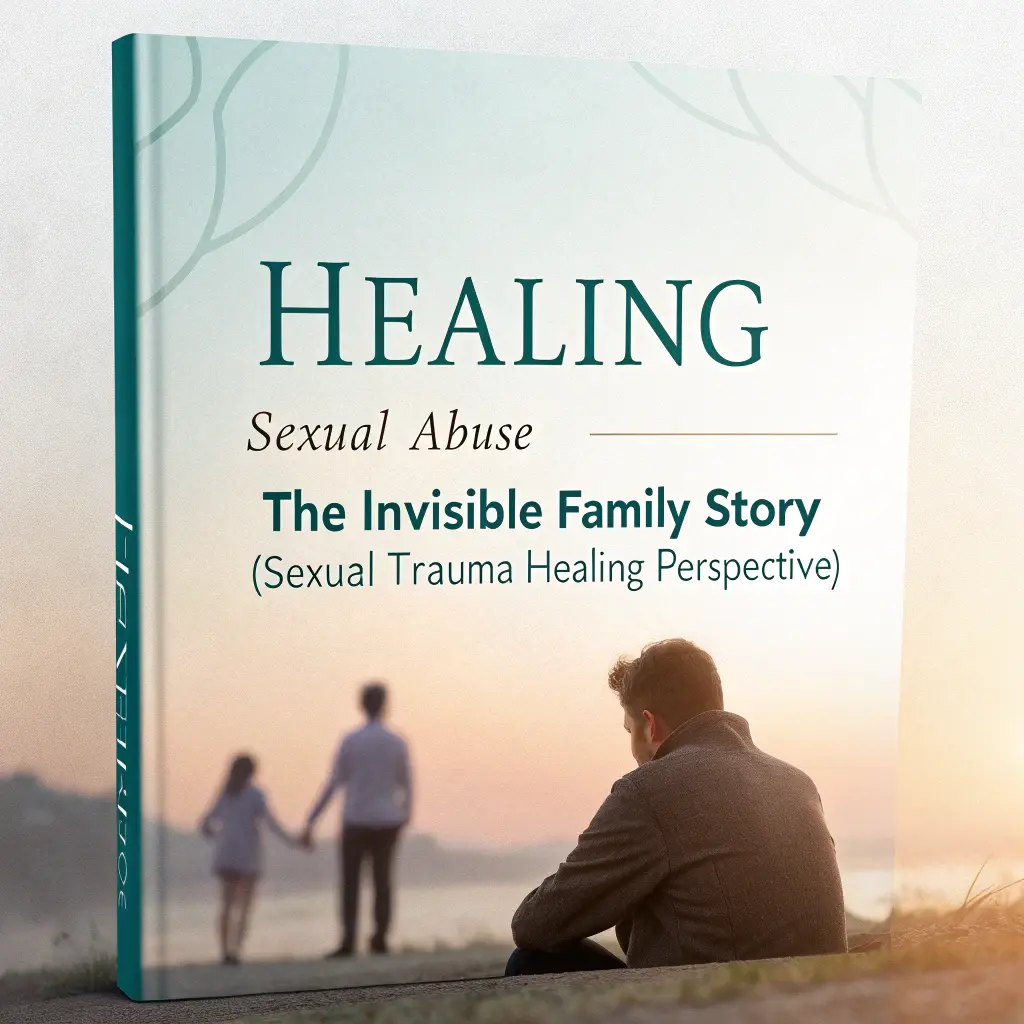
Healing Sexual Abuse: The Invisible Family Story (Sexual Trauma Healing Perspective)
Sexual abuse is not only an event that happened in the past.
It is often an experience that continues in the body, in memory, in relationships, and sometimes even across generations.
Sexual trauma healing is not simply about forgetting what happened. It is about understanding what happened to the body, the mind, the identity, and sometimes the family system itself.
Many survivors say the same thing:
“I know it happened long ago, but I still react as if it is happening now.”
This is because trauma is not stored as a memory alone. Trauma is stored as sensation, fear, shame, silence, and broken trust.
Research shows that sexual abuse is one of the most psychologically damaging forms of trauma. Studies indicate that approximately 70% of sexual assault survivors experience moderate to severe psychological distress, and sexual assault is one of the leading causes of PTSD, especially in women.
This means that sexual abuse is not only a social issue or a legal issue.
It is a nervous system injury.
It is a relationship injury.
It is an identity injury.
And this is why sexual trauma healing requires a multidimensional approach.
Trauma is Not Only What Happened to You
One of the most misunderstood aspects of sexual trauma healing is this:
Trauma is not only what happened – trauma is what happened inside you as a result.
Two people can go through the same event, and one develops lifelong trauma while the other does not. The difference is not the event; it is the support, safety, and emotional processing available afterward.
Sexual abuse often creates deep internal beliefs such as:
I am unsafe
I am powerless
I am dirty
I am not in control
My body is not mine
I cannot trust people
Love is dangerous
Healing therefore is not only about processing memory – it is about changing identity, which is central to sexual trauma healing.
The Body Remembers What the Mind Tries to Forget
Many survivors do not remember details clearly. Some remember everything. Some remember nothing but still feel fear, shame, or discomfort in intimacy.
This happens because trauma is stored in the nervous system and the body. Survivors often experience anxiety, depression, anger, relationship difficulties, dissociation, low self-worth, sexual difficulties, and chronic body tension.
This is why sexual trauma healing is not just psychological work.
It is emotional work, body work, identity work, and relational work.
A Systemic Perspective: When Trauma Does Not Start With You
From a systemic family constellation perspective, something very important emerges in sexual trauma healing work:
Sometimes trauma does not begin with the survivor. Sometimes trauma begins in the family system generations earlier.
In systemic work, we often see patterns like:
- Abuse repeating across generations
- Silence around sexual abuse in families
- Victims who later become abusers
- Children unconsciously carrying the shame of parents or grandparents
- Loyalty to family secrets
Understanding this often reduces shame — because survivors realise the abuse was not their fault, and sometimes not even only about them. This awareness becomes a powerful step in sexual trauma healing.
The Silent Mother
A woman in her late 30s came for therapy because she had panic attacks whenever someone touched her unexpectedly. She had no memory of abuse.
During systemic work, it emerged that her mother had been sexually abused by a relative but never spoke about it. The mother lived in constant fear and emotional withdrawal. The daughter grew up sensing danger but never knowing why.
The daughter had inherited fear, not the event.
This is where deeper layers of sexual trauma healing begin to unfold.
The Pattern of Powerlessness
A client who had experienced sexual abuse in childhood kept entering relationships where she felt controlled and powerless.
In systemic constellation work, it became visible that the women in her family for three generations had experienced abuse or forced marriages. There was a pattern of female powerlessness in the system.
Her behaviour was not random. It was systemic loyalty.
Healing sometimes begins when we say:
“This pain did not start with me, and it will not continue through me.”
This shift is a defining moment in sexual trauma healing.
Healing Is Not About Becoming the Same Person Again
Sexual trauma healing often transforms a person permanently. But transformation does not mean damage – it can also mean depth.
Survivors often develop emotional intelligence, strong boundaries, compassion, awareness of power dynamics, psychological insight, and deep empathy.
Healing is not returning to innocence.
Healing is building awareness and power.
The Real Healing Journey
Sexual trauma healing often includes reclaiming the body, reclaiming boundaries, reclaiming voice, reclaiming sexuality, reclaiming trust, reclaiming identity, and reclaiming power.
But the most important part of healing is this:
Moving from “This happened to me” to “This is not who I am.”
Sexual abuse is something that happened.
It is not an identity.
It is not destiny.
It is not the end of the story.
Healing begins the moment shame is replaced with understanding.
Healing deepens when silence is replaced with truth.
Healing completes when the survivor stops seeing themselves as broken and starts seeing themselves as someone who survived.
And survival is not weakness.
Survival is strength.
FAQs
Sexual trauma healing is the process of recovering from the emotional, psychological, and physical impact of sexual abuse. It involves working with the nervous system, emotions, body memory, and identity to restore a sense of safety, control, and self-worth.
Unresolved sexual trauma can show up as anxiety, panic during touch, relationship difficulties, shame, low self-worth, dissociation, or feeling unsafe without a clear reason. Many people experience body reactions even when they don’t remember the event clearly.
Trauma is not stored only as memory—it is stored in the nervous system and body sensations. This is why survivors may feel fear, tension, or discomfort even years later. Sexual trauma healing often requires body-based approaches to release these stored responses.
Yes, trauma can be passed through family systems. Patterns like silence, fear, shame, or abuse can repeat across generations. In modalities like family constellation therapy, this is seen as generational or inherited trauma.
Common symptoms include PTSD, anxiety, depression, emotional numbness, trust issues, sexual difficulties, chronic stress, and difficulty maintaining healthy relationships.
Healing is not linear and varies from person to person. Some people see shifts in months, while deeper healing may take longer depending on the level of trauma, support, and therapeutic approach used.
Yes. Healing does not always require full memory recall. Since trauma is stored in the body and nervous system, sexual trauma healing can happen through emotional and somatic work even without conscious memory.
Effective approaches include trauma-informed therapy, somatic therapy, nervous system regulation, inner child healing, and family constellation therapy. These methods address both the emotional and systemic layers of trauma.
Sexual trauma can affect trust, boundaries, and emotional safety. Survivors may feel unsafe, disconnected, or triggered in close relationships, especially in situations involving vulnerability or intimacy.
Healing does not mean erasing the past, but it is possible to reach a place where the trauma no longer controls thoughts, emotions, or relationships. Sexual trauma healing allows individuals to reclaim their identity, power, and sense of safety.