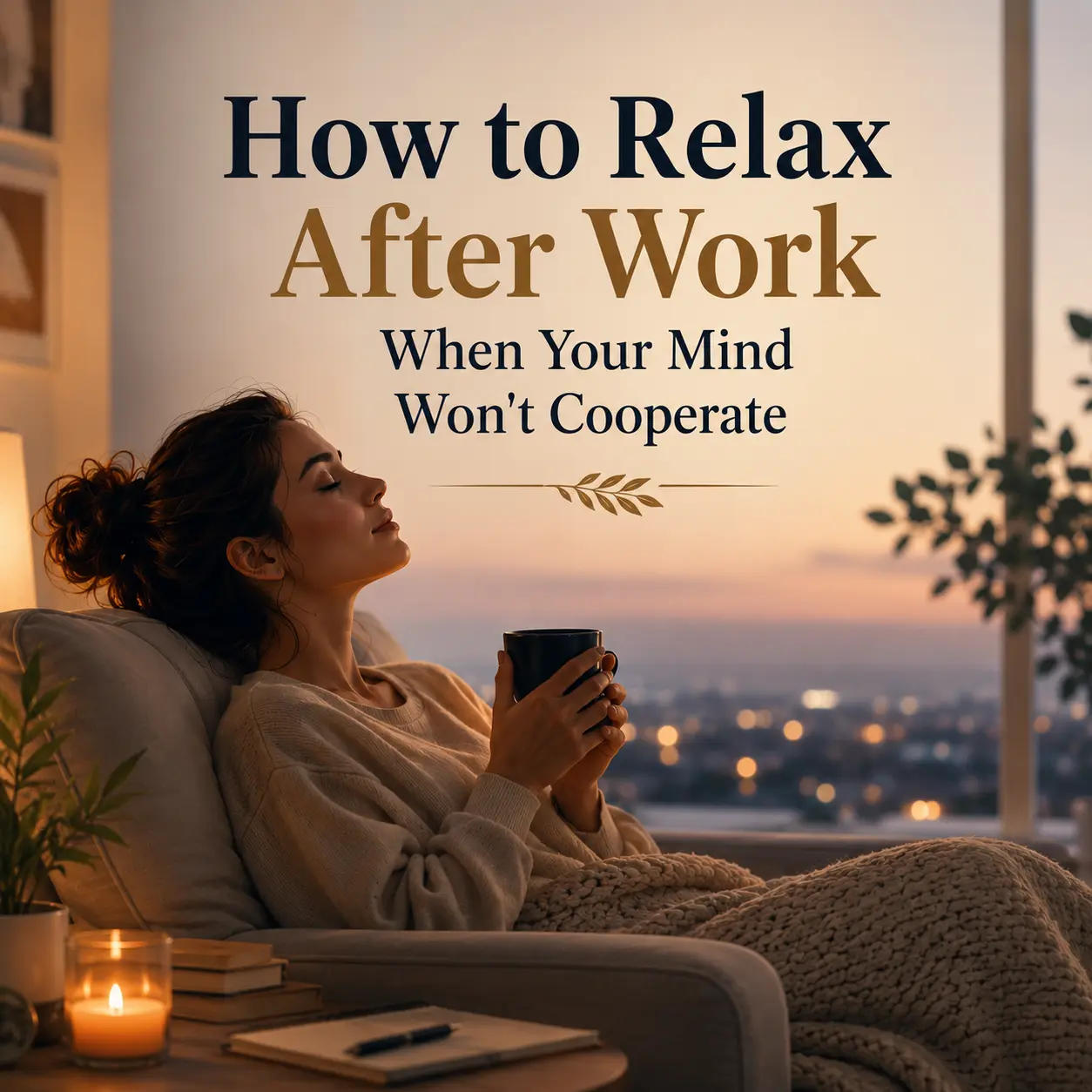
If you’ve been searching for how to relax after work, chances are your body has already stopped — but your mind hasn’t gotten the message yet.
The work day ends. You close your laptop. But your mind does not get the message.
You are cooking dinner, and part of your brain is still writing tomorrow’s email. You are talking to someone you love, but a quiet list of unfinished tasks is running in the background. You lie down in bed, and your body is resting — but your mind keeps replaying the day, planning ahead, and worrying.
Sound familiar? You’re not alone. Millions of people search for how to relax after work every single day, because switching off has become one of the hardest parts of modern life.
Here’s the good news: this is not a willpower problem. It’s not something wrong with you. And once you understand why it happens, it becomes much easier to fix.
How to Relax After Work: Why It Feels So Hard
When you’re under pressure — deadlines, emails, targets, being available all the time — your body’s stress system stays switched on. It releases a stress hormone called cortisol. Your nervous system stays alert, ready for action, even after the actual work is done.
The problem is, your brain doesn’t always know the difference between real danger and a full inbox. Both can feel like “something needs my attention right now.”
Over time, this “always on” state becomes normal for your body. Harvard Health explains that when the brain keeps sensing a threat, the stress system stays switched on like an engine idling too high for too long — and that’s exactly why relaxing doesn’t feel natural anymore. It can even feel strange or hard to do.
This is not weakness. It’s simply a stress response that has been running too long, without enough rest in between. (If this constant “on” feeling sounds familiar, you may also relate to what we’ve shared before about unexplained anxiety and corporate burnout.)
Why the Usual Tricks Don't Always Work
Most of us try one of three things to relax after work:
- Distraction – scrolling on the phone, watching TV, having a drink
- Sedation – sleeping early, eating heavy food, just powering through tiredness
- Effort – meditation apps, breathing exercises, journaling
These can help a little. But they mostly deal with how you feel, not with why your body is stuck in stress mode. That’s why the same tired, wound-up feeling often comes back the very next day.
What actually helps is something that clearly tells your nervous system: it’s safe now, you can rest. And ideally, something that doesn’t ask more effort from a mind that is already tired.
A Simple Way to Decompress After Work: Access Bars
If you’re still wondering how to relax after work when nothing else has worked, one gentle option many people are turning to is called Access Bars. It’s a simple, hands-on therapy where a practitioner lightly touches 32 points on your head. Each point is linked to a different part of your thoughts and life experiences.
You don’t have to do anything during a session. You just lie down. The practitioner works quietly. And for many people, this is the first time in weeks that their mind actually goes quiet.
Some early research has looked at what happens in the brain during a session. Neuroscientist Dr. Jeffrey Fannin used a brain-scanning tool called EEG to check brain activity before and after an Access Bars session, and noticed calmer, more balanced brain patterns afterward — similar to what’s seen in experienced meditators. It’s worth knowing this research hasn’t been published in a scientific journal yet, so think of it as an early, interesting finding rather than final proof. Still, it matches what a lot of people say they feel after a session.
Want to understand exactly how it works and what a session feels like? You can read our full guide to Access Bars therapy.
What People Usually Notice
After just one session, people often say they:
- Sleep more deeply that night
- Have a quieter mind, with less overthinking
- Feel calmer and more like themselves
Everyone is different, so results can vary from person to person. But these are the most common things people share.
With regular sessions, some people notice bigger changes over time – like actually feeling “off duty” once they leave work, instead of carrying the day home with them.
This is why it’s especially popular with people in high-pressure jobs – finance, tech, healthcare, law, and leadership roles. After a day of non-stop thinking, it can feel like a relief to simply receive, instead of trying harder to relax.
You're Not Failing - You Just Need to Learn How to Switch Off
If you’ve been struggling to relax after work, it doesn’t mean something is wrong with you. It usually just means your mind hasn’t had a real chance to switch off in a while.
The good news? It can learn again.
Where to start
If any of this describes something you recognise, the first step is a conversation rather than a commitment. A free consultation exists to work out what would genuinely help — including saying plainly if this is not the right approach for you.