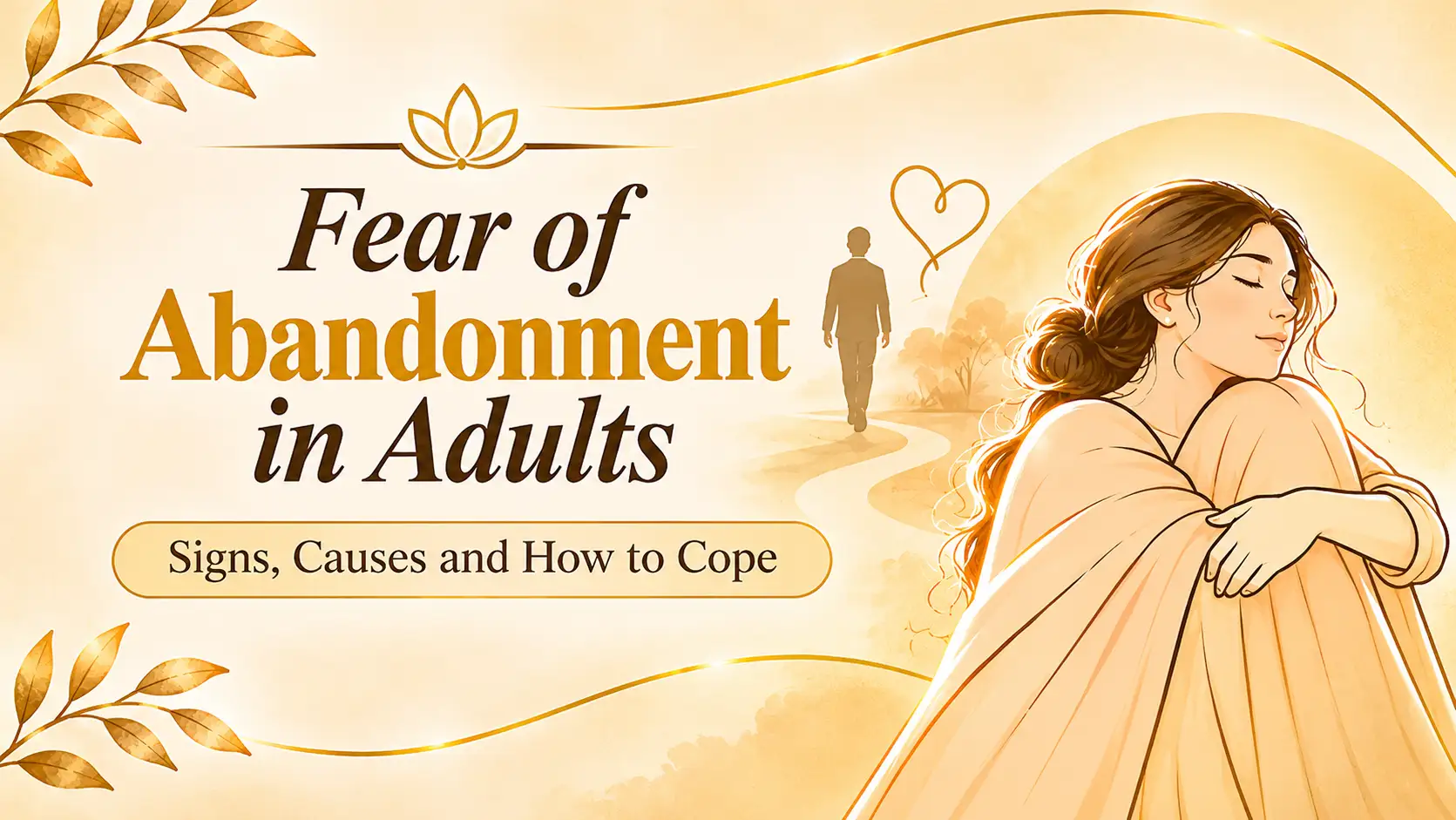
Have you ever felt anxious when someone you love does not reply to your message? Do you overthink small disagreements or worry that people may eventually leave you? Sometimes, even when a relationship seems perfectly fine, the fear of losing someone can make it difficult to feel emotionally secure.
This experience may be connected to a fear of abandonment.
Fear of abandonment is the persistent worry of being left, rejected or emotionally disconnected from someone important. It can influence how you trust people, communicate your needs and respond to changes in relationships.
For some adults, these fears may be connected to childhood experiences. For others, they may develop after a painful breakup, betrayal or the loss of someone close. Understanding these patterns can help you recognise your emotional triggers and build healthier relationships.
What Is Fear of Abandonment?
Fear of abandonment refers to an intense or recurring fear that someone important may leave, stop caring or withdraw emotionally.
For example, a delayed message may feel like rejection, a partner asking for personal space may create insecurity, or a small disagreement may make you question the future of your relationship.
Some people respond by seeking constant reassurance and trying to keep everyone happy. Others withdraw emotionally or push people away before they can get hurt.
Fear of abandonment is not a mental health diagnosis by itself. It is an emotional pattern that can have different causes and may overlap with anxious attachment. You can read more about anxious attachment and its relationship patterns from Cleveland Clinic.
7 Common Signs of Abandonment Issues in Adults
Fear of abandonment can appear differently in different people. Some common signs include:
- Constantly worrying about being left: You frequently imagine that your partner, friend or family member will lose interest in you.
- Needing repeated reassurance: You regularly ask whether someone is upset, whether they still care or whether everything is okay.
- Overthinking small changes: A delayed reply, cancelled plan or change in someone's tone may trigger unnecessary worry.
- Difficulty trusting others: Even when people treat you well, you may expect disappointment or rejection.
- People-pleasing: You avoid expressing disagreement or setting boundaries because you fear upsetting someone.
- Staying in unhealthy relationships: The thought of being alone may feel more frightening than remaining in a relationship that does not meet your emotional needs.
- Pushing people away: You may withdraw or end relationships first to avoid the possibility of being rejected.
These signs do not automatically indicate a psychological disorder. Their frequency, intensity and impact on everyday life matter.
What Causes Fear of Abandonment?
There is rarely one single reason behind abandonment issues. Early experiences, family relationships and difficult adult experiences can all contribute.
1. Childhood Emotional Neglect
Children need emotional attention, affection and consistency alongside their physical needs. When their feelings are repeatedly dismissed or caregivers remain emotionally unavailable, they may struggle to develop a sense of security.
Read more about inner child wounds and childhood emotional experiences.
2. Losing an Important Person
Parental separation, the death of a loved one or the sudden absence of a caregiver can affect a person's sense of safety. These experiences may influence how they respond to separation and emotional distance later in life.
3. Inconsistent Caregiving
When affection and attention are unpredictable, children may become highly sensitive to changes in other people's moods. As adults, they may constantly seek reassurance or worry about losing important relationships.
4. Painful Adult Relationships
Betrayal, infidelity, emotional neglect, divorce or a sudden breakup can make it difficult to trust again. In some cases, these experiences can strengthen an existing fear of being left.
You can also explore how emotional abuse can affect relationships.
How Fear of Abandonment Affects Relationships
Abandonment fears can influence romantic relationships, friendships and family connections.
You may become anxious when your partner needs personal space, feel insecure when friends make independent plans or avoid expressing your needs because you fear conflict.
Sometimes, this creates a cycle: you seek reassurance, feel temporarily better and then become anxious again when another situation triggers the same fear.
The goal is not to stop depending on people altogether. Healthy relationships involve emotional support and mutual care. The aim is to develop security without making your entire sense of worth dependent on another person's attention.
How to Cope With Fear of Abandonment
You may not be able to change every past experience, but you can gradually develop healthier ways of responding to your fears.
1. Recognise Your Triggers
Notice which situations create anxiety. Is it delayed communication, disagreements, cancelled plans or emotional distance? Writing down your thoughts and feelings can help identify recurring patterns.
2. Challenge Negative Assumptions
A delayed reply does not necessarily mean rejection. Before assuming the worst, consider other possible explanations. Give yourself time to understand what happened instead of reacting immediately.
3. Communicate Your Needs
Instead of expecting someone to understand your feelings, express them clearly. For example, you could say, "I feel anxious when plans change without communication. It would help me if we could discuss changes beforehand."
4. Build Self-Worth and Healthy Boundaries
You can care about someone without constantly pleasing them. Practise saying no, respecting your own limits and making time for interests and relationships outside one particular connection.
5. Consider Professional Support
If fear of abandonment repeatedly affects your relationships or daily life, speaking with a qualified mental health professional may help. Approaches such as cognitive behavioural therapy can help people examine unhelpful thought patterns and develop healthier responses.
Can Childhood Experiences Influence Fear of Abandonment?
Yes. Early relationships can influence how people understand trust, closeness and emotional availability. However, childhood experiences do not determine every future relationship.
For people who want to explore how earlier emotional experiences may relate to present-day behaviour, Inner Child Therapy offers one framework for reflecting on childhood memories and unmet emotional needs.
Family Constellation Therapy is another approach that explores family relationships and recurring patterns. These complementary approaches should not be treated as substitutes for established mental health assessment or treatment.
Final Thoughts
Fear of abandonment can make even meaningful relationships feel uncertain. You may find yourself overthinking conversations, seeking reassurance or expecting rejection before anything has actually happened.
But your past experiences do not have to define your future relationships. Recognising your triggers, understanding your emotional patterns and learning to value yourself can help you build greater emotional security.
You do not have to stop caring deeply about people. You can learn to stay connected while maintaining your own identity, confidence and sense of self-worth.
Frequently asked questions
Common signs include fear of being left, repeated reassurance-seeking, difficulty trusting others, jealousy, people-pleasing and avoiding emotional closeness.
Yes. Experiences such as betrayal, divorce, sudden breakups or losing someone important can contribute to abandonment fears.
No. They are related but not identical. Anxious attachment is a relationship pattern that can involve fear of rejection, heightened insecurity and a strong need for reassurance.
Many people learn to manage these fears through self-awareness, healthier communication, boundaries and appropriate professional support.
Common signs include constantly worrying that someone will leave, needing frequent reassurance, overthinking conversations, difficulty trusting others, people-pleasing and staying in unhealthy relationships out of fear of being alone.
Abandonment issues can develop due to childhood emotional neglect, inconsistent caregiving, parental separation, losing someone important or painful relationship experiences such as betrayal, rejection or sudden breakups.
Yes. Fear of abandonment can lead to insecurity, jealousy, repeated reassurance-seeking and difficulty trusting a partner. Some people may become overly dependent, while others push their partners away to avoid getting hurt.
You can start by identifying emotional triggers, challenging negative assumptions, communicating your needs clearly and developing healthy boundaries. If these fears repeatedly affect your relationships or daily life, speaking with a qualified mental health professional can help.
Where to start
If any of this describes something you recognise, the first step is a conversation rather than a commitment. A free consultation exists to work out what would genuinely help — including saying plainly if this is not the right approach for you.