If you’ve been asking yourself, “why can’t I sleep even when tired,” you are not imagining it, and you are not alone.
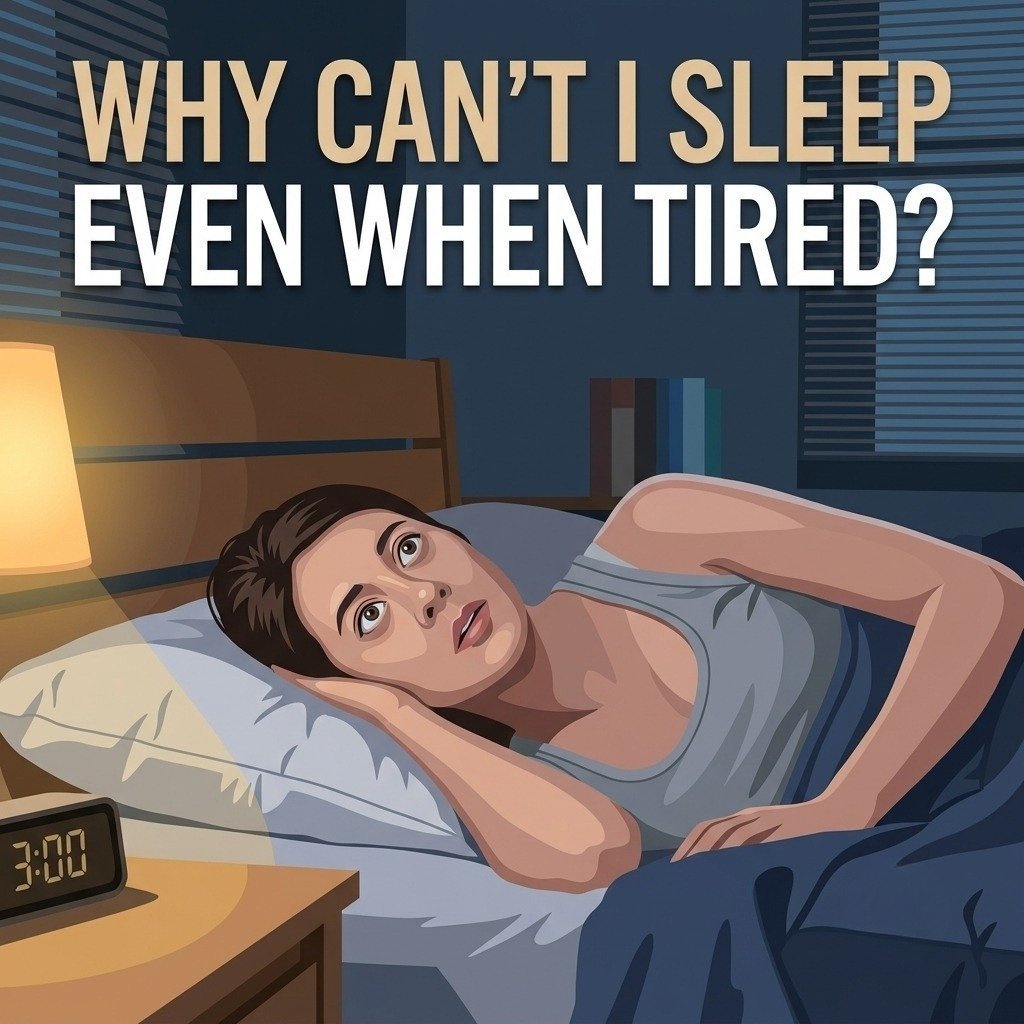
You are tired. I’m really tired. You’ve felt this way for weeks, maybe months. But when you finally lie down, and the room goes quiet, sleep doesn’t come. Or it comes for a while, and then leaves you wide awake at 3 AM, staring at the ceiling while your mind picks up right where it left off.
This is one of the most common struggles people have today, especially working adults in their 30s and 40s. If you keep wondering why you can’t sleep even when tired, here’s the strange part: the more tired you are, the harder it can feel to actually fall asleep.
Why Can't I Sleep Even When Tired? Here's What's Really Happening
Most people think sleep only needs one thing: a tired body. But sleep actually needs two things — a tired body, and a mind that feels safe.
You can have plenty of the first and still be missing the second.
Your nervous system’s main job is to keep you safe. So it’s always scanning for anything that feels like a threat. When it has been under stress for a long time — a busy job, constant pressure, too much on your mind — it starts to stay “switched on,” even at night. Sleep Foundation explains that chronic stress keeps the nervous system in this heightened state, which can reduce deep sleep and disrupt normal sleep cycles. And a nervous system that doesn’t feel safe won’t let you fully rest, no matter how tired your body is.
This is why you can feel exhausted and still lie awake, wondering why you can’t sleep even when tired. Your body wants to sleep. Your mind won’t let it.
What Keeps Your Mind Awake at Night
A few common things can keep your nervous system “switched on” after you go to bed:
- The day’s leftover stress – things you didn’t finish thinking about, conversations that are still playing in your head
- Feelings you pushed aside – stress, worry, or sadness that you didn’t have time to actually feel during the day
- Old, deep-rooted patterns – some people carry a kind of alertness passed down through their family, almost like an old habit of staying “on guard”
- Background anxiety – money worries, world news, too much phone time – things your mind can’t always tell apart from real danger
None of these get fixed by a sleep pill or a white noise app. They need something that calms the mind at a deeper level.
A Gentle Way to Sleep Better Naturally: Access Bars
One option many people are trying, to help them sleep better naturally, is called Access Bars – you can read our full guide to Access Bars here.
Access Bars is a simple, hands-on therapy. A practitioner gently touches 32 points on your head. Each point is connected to a different kind of thought or feeling. You don’t have to do anything. You just lie down and let your mind settle.
Some early research has looked at how the brain responds during a session. Neuroscientist Dr. Jeffrey Fannin used EEG scans to study the brain before and after Access Bars sessions, and reported calmer, more balanced brain activity afterward – a pattern similar to what’s seen in people who meditate regularly. It’s worth knowing that this research was shared by the Access Consciousness community and hasn’t been published in an independent, peer-reviewed science journal, so it’s best understood as an early, interesting observation rather than final proof. Still, it lines up with what many people say they feel after trying it.
What People Usually Notice
Many people say they sleep more deeply the very first night after a session, and finally stop asking why they can’t sleep even when tired. Common things people report:
- Falling asleep more easily
- Fewer 3 AM wake-ups
- A quieter mind at bedtime
- Feeling calmer overall, not just at night
Everyone is different, so results can vary from person to person. With a few sessions over time, some people notice bigger, longer-lasting changes – sleep starts to feel like something that happens naturally, instead of something they have to fight for.
Access Bars Works Well Alongside Good Sleep Habits
Access Bars isn’t meant to replace good sleep habits – it works best together with them. Things like going to bed at the same time, avoiding screens before bed, and keeping your room cool and dark still matter. Think of good sleep habits as the ground, and Access Bars as something that helps clear the way.
A Quick Note
Access Bars is a wellness practice, not a medical treatment. If you have ongoing sleep problems, please also talk to a doctor – especially if you snore heavily, gasp for air at night, or feel very sleepy during the day, as these can be signs of a medical sleep condition that needs proper diagnosis.
You Were Made to Rest
If you keep asking yourself why you can’t sleep even when tired, remember – this isn’t a flaw in you. Your nervous system has simply forgotten what it feels like to feel safe enough to rest. And it can learn again.
Where to start
If any of this describes something you recognise, the first step is a conversation rather than a commitment. A free consultation exists to work out what would genuinely help — including saying plainly if this is not the right approach for you.