You’ve had this argument before.
The words are different. The place is different. Sometimes even the reason is different. Yet the feeling is exactly the same—the familiar frustration, the emotional intensity, and the silence that follows.
That is what makes recurring relationship conflict so confusing. From the outside, both of you know the issue shouldn’t escalate this much. You’ve talked about it calmly. You’ve promised to respond differently next time. You’ve learned communication techniques, made agreements, and genuinely tried.
Yet somehow, the same argument returns, almost as if it has a life of its own.
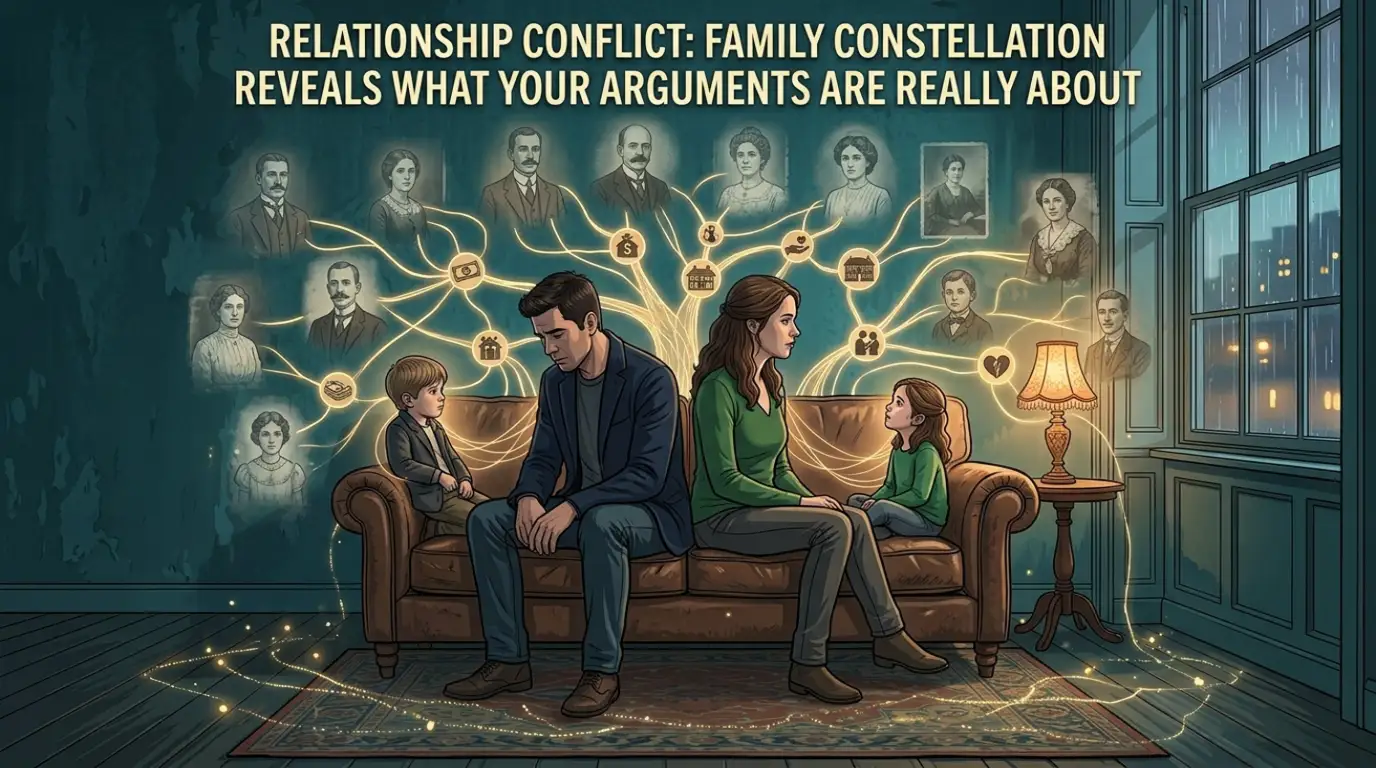
Family Constellation Therapy offers a perspective that goes beyond traditional relationship counselling. It suggests that the person standing in front of you during a conflict may not be the person your nervous system is truly reacting to. At a deeper level, your partner may be carrying the emotional imprint of someone from your own family history.
Partners Often Reflect Our Family System
One of the most profound discoveries in Family Constellation work is that intimate partners often unconsciously mirror important figures from each other’s family of origin. This isn’t simply symbolic—it is a systemic pattern observed repeatedly across different cultures, relationships, and life experiences.
A partner who withdraws may unknowingly awaken the pain of growing up with an emotionally unavailable parent.
A partner’s anger may feel terrifying, not because they are dangerous, but because your nervous system learned long ago that anger meant rejection, fear, or emotional abandonment.
In these moments, your relationship conflict is rarely about the present situation alone. Very often, your history is quietly influencing how you experience your partner.
Why Does the Same Relationship Conflict Keep Repeating?
When couples experience the same argument again and again, it is often a sign of an unresolved systemic pattern rather than poor communication or incompatible personalities.
Communication skills certainly matter, but they can only address what is happening on the surface.
Underneath many recurring arguments lies an older emotional story that has never been fully acknowledged.
Each time the conflict returns with the same emotional charge, the family system may be asking for recognition. The original wound—whether between a child and a parent or a family dynamic carried across generations—continues seeking resolution through the closest relationship available.
This is one of the reasons many people wonder, “Why do I keep fighting with my partner?”
The answer is not always found in the current relationship. Sometimes the real relationship conflict root cause exists much further back.
Hidden Patterns That Often Drive Relationship Conflict
Family Constellation work frequently reveals several recurring dynamics beneath ongoing relationship struggles.
The Unloved Parent
When someone grows up without receiving enough emotional love or safety from a parent, they may unknowingly seek that missing love from their partner. The expectation becomes impossible for the partner to fulfil because the longing was never truly meant for them.
Blurred Emotional Boundaries
If healthy emotional separation from a parent never developed, ordinary disagreements can feel deeply personal. A simple disagreement may feel like rejection. A moment of criticism may feel like abandonment.
Inherited Relationship Patterns
Many couples unknowingly recreate the relationship they witnessed growing up. Without realizing it, they repeat familiar emotional patterns because those patterns became their first understanding of love and intimacy.
Unconscious Family Loyalties
Sometimes happiness itself creates conflict.
If love brought suffering in previous generations, or if a parent remained unhappy in relationships, succeeding in your own relationship can unconsciously feel like disloyalty. The mind may then recreate the very struggles it hopes to escape.
What Family Constellation Therapy Sees That Traditional Couples Therapy Often Doesn't
Traditional couples therapy focuses primarily on the relationship between two individuals.
Family Constellation Therapy expands the picture by exploring the family systems that both partners carry with them.
Instead of asking only, “Why are these two people arguing?” it asks a deeper question:
“Who else is present in this relationship through inherited emotional patterns?”
This broader perspective helps explain why some family constellation relationships reveal dynamics that ordinary conversations cannot fully uncover.
During an individual constellation session, even without a partner being present, hidden family dynamics can become visible. The emotional roles people have been unconsciously carrying can be identified, acknowledged, and gently released.
Many clients describe an unexpected shift after this work.
Their relationship may not become perfect overnight, but the emotional charge surrounding the recurring conflict often changes. The same disagreement no longer feels overwhelming. They become more present with each other instead of reacting from old family wounds.
When the Argument Isn't Really About the Argument
Traditional couples therapy focuses primarily on the relationship between two individuals.
Family Constellation Therapy expands the picture by exploring the family systems that both partners carry with them.
Instead of asking only, “Why are these two people arguing?” it asks a deeper question:
“Who else is present in this relationship through inherited emotional patterns?”
This broader perspective helps explain why some family constellation relationships reveal dynamics that ordinary conversations cannot fully uncover.
During an individual constellation session, even without a partner being present, hidden family dynamics can become visible. The emotional roles people have been unconsciously carrying can be identified, acknowledged, and gently released.
Many clients describe an unexpected shift after this work.
Their relationship may not become perfect overnight, but the emotional charge surrounding the recurring conflict often changes. The same disagreement no longer feels overwhelming. They become more present with each other instead of reacting from old family wounds.
Where to start
If any of this describes something you recognise, the first step is a conversation rather than a commitment. A free consultation exists to work out what would genuinely help — including saying plainly if this is not the right approach for you.